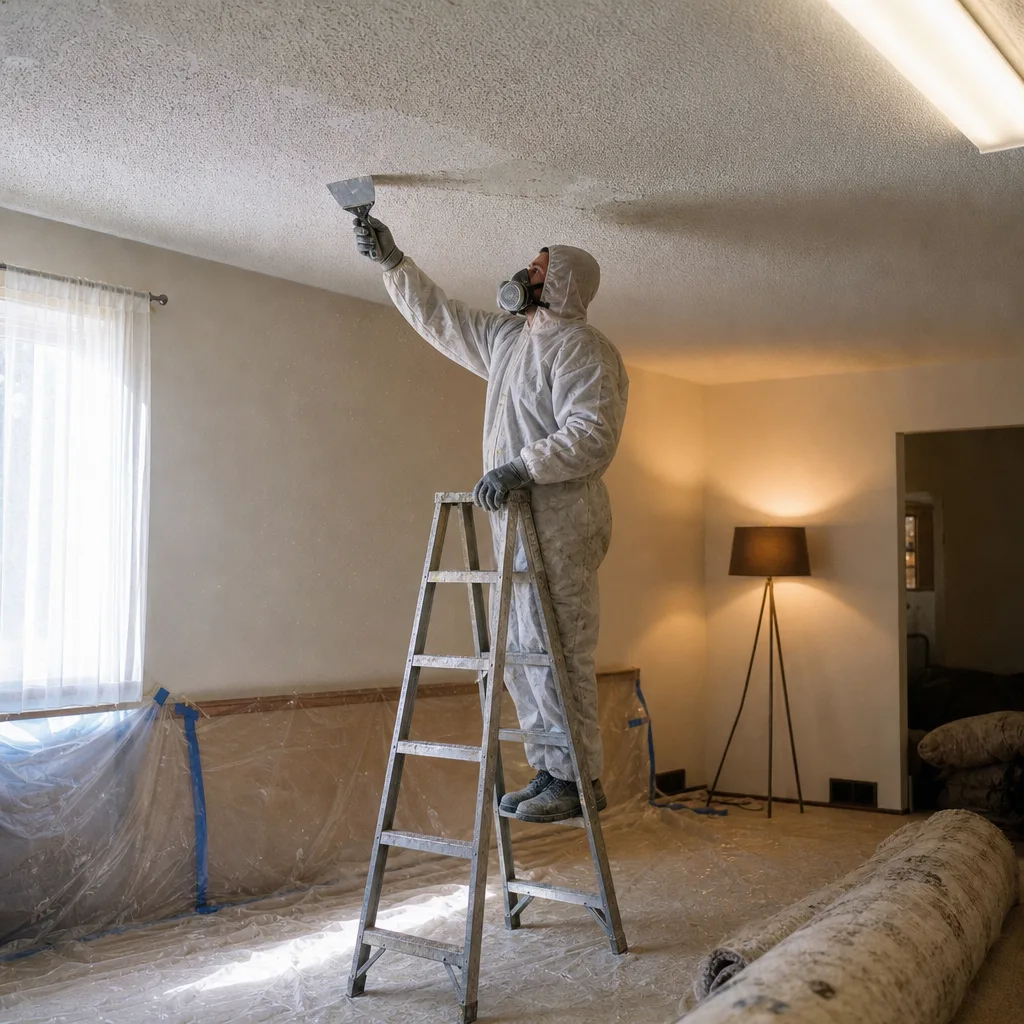
Pre-1990 Ceiling Texture Needs Testing Before Removal
If your ceiling texture went up before 1990, a lab has to test it before anyone scrapes it. A negative result means removal can go ahead. A positive result means a licensed abatement contractor handles the removal, and drywall work starts after that.
Some textured ceiling products made before 1990 contained asbestos. You can't tell by looking. A ceiling with asbestos looks and feels the same as one without it. Color, age, and how bumpy it is won't tell you anything. Only a lab can answer the question, by checking a small sample.
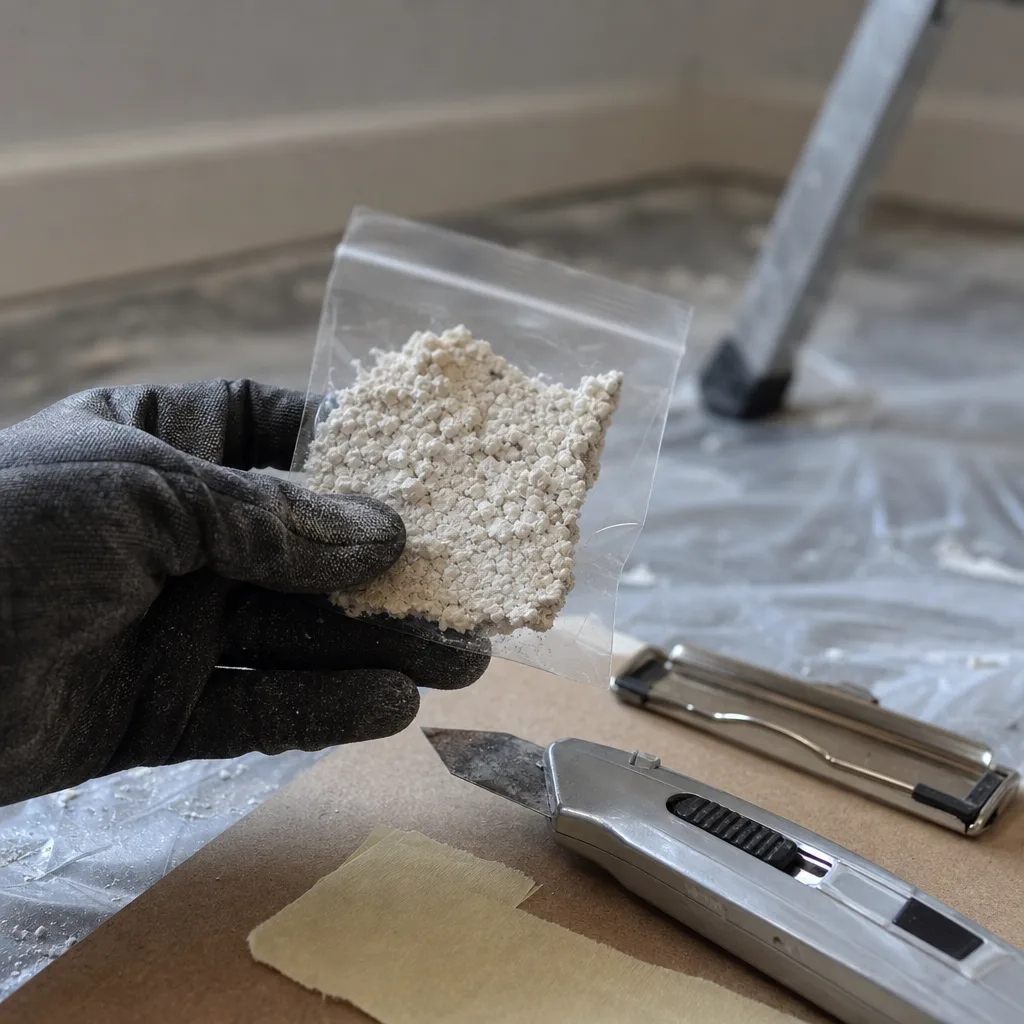
That's why we test first on every pre-1990 ceiling texture in Calgary. It isn't an upsell or an extra step we add to pad the job. It's what has to happen before any scraping, sanding, or patching that would break up the texture.
Until you have a result, leave the ceiling alone. Popcorn texture is usually stable when nobody touches it. The risk comes from disturbing it. Scraping it, sanding it, drilling through it for a new light, or knocking chunks loose during a reno all count. If a corner is already flaking, don't vacuum it up or chip away the loose part to see what's underneath.
Plenty of Calgary houses went up before 1990, and a lot of them still have the original popcorn ceiling in the bedrooms, hallways, or basement. If you're not sure when your house was built or when the ceiling was textured, treat it as pre-1990 until you know for sure. Older ceilings sometimes got a newer coat of texture over the top, so a fresh-looking ceiling doesn't rule anything out.
Here's how it plays out depending on the result:
- Negative result: the texture can come off, and we can move ahead with popcorn ceiling removal, then the skim coat, sanding, and finish the ceiling needs.
- Positive result: a licensed abatement contractor removes the texture. Calgary Drywall Doctor doesn't do asbestos removal. Once the abatement work is done, we can come back for the drywall side: repairs, new board where it's needed, and finishing.
- Ceiling built in 1990 or later: testing isn't required, and the job goes straight to the quote and scope.
Testing also changes what you should expect on your quote. We come out to see every job in person. We measure it, check for moisture or damage, and write up an itemized scope. If the ceiling is pre-1990, the scope reflects that testing comes first. You'll know where the drywall work starts and where it doesn't, so nothing on the ceiling side catches you off guard after work begins.
Picture this. You've bought an older bungalow and you want the popcorn gone before you paint and move in. Booking the test first can feel like a delay. But scraping a ceiling that turns out positive spreads the problem through the whole house, into the vents, the carpet, and everything else you own. Getting the answer first takes a little time up front. It's the only order that makes sense.
How a Popcorn Ceiling Removal Visit Works
A popcorn ceiling removal job starts with a visit, not a price over the phone. We come out in person, look at the ceiling, and measure every room you want done. The quote is free, and it comes to you as an itemized written scope.
During that visit, we check for moisture and damage. This matters more on a ceiling than most people think. A faint brown ring near a bathroom or under an upstairs tub can mean water got into the board at some point. If that board is still damp or soft, it needs to be dealt with first. Scraping and finishing over it just hides the problem until it shows up again. If your texture is pre-1990, the scope also shows the testing step from the section above before any removal is listed.
Your written scope spells out what the job covers, line by line. On a typical removal, that means:
- Which rooms and ceilings are included
- Taking the popcorn texture off
- Repairs to the drywall underneath, like nail pops, loose tape, or old patches
- Skim coating and sanding so the ceiling is flat and even
- The finish you want: smooth, or a new texture like knock down
That repair line is there for a reason. Popcorn texture covers a lot. Once it's off, you'll often see what it was hiding, like seams that were never taped well, screw heads, or dents from an old light fixture. A ceiling that's only been scraped won't look smooth. It needs taping, mudding, and a skim coat before it's ready for paint. Knowing that up front means the scope matches what the ceiling needs.
On work days, our lead finisher heads up the finishing. If the ceiling is part of a larger basement or full renovation, a boarding and taping crew works alongside our lead finisher. That crew is trained in dust control and is in your home day to day, so you'll know who's there and why.
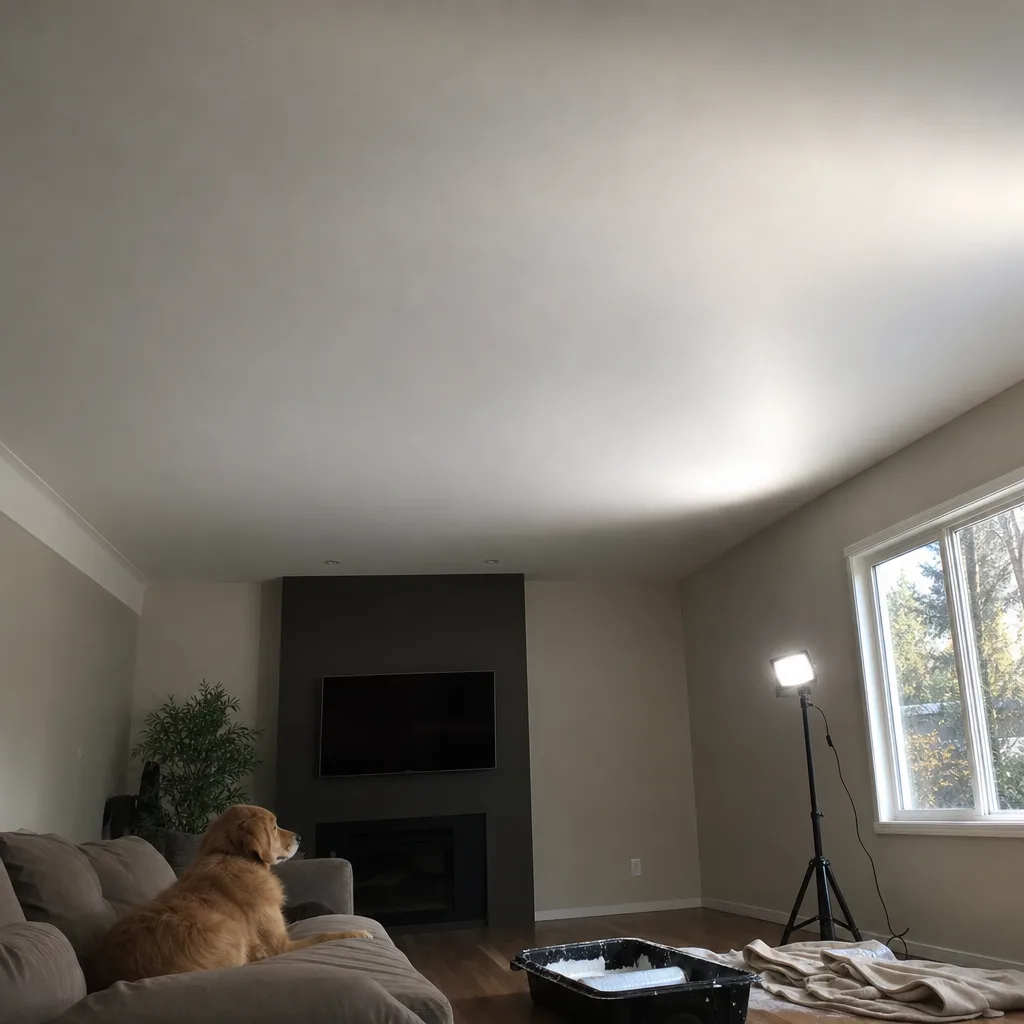
The last step is a raking-light inspection. We hold a light low and shine it across the ceiling at a sharp angle. Straight-on light hides small ridges and dips, but light from the side throws a shadow off every flaw. It's the same thing that happens when afternoon sun comes through a window and lands across a ceiling. If a seam or sanding mark is there, raking light shows it now instead of after your paint is on.
If something comes up while the job is underway, like a question about a light fixture, a change to which rooms get done, or what a spot on the ceiling means, you can call us directly. Your contact stays the same from the first visit through the final walkthrough, so you're not passing messages through someone who hasn't seen your ceiling.
Not sure what your project needs?
We look at the job in person and put the scope and price in writing. No obligation.
Checking for Moisture and Damage Before Boarding
New drywall should only go up on framing and walls that are dry and solid. If moisture or damage is behind the board when it's hung, the problem doesn't go away. It gets sealed in, and it shows up later as cracks, stains, or a musty smell you can't trace. That's why we still check for moisture before boarding on every job, more than 20 years after Calgary Drywall Doctor started.
Drywall is gypsum wrapped in paper, and both soak up water. Board that stays damp can go soft, sag, and grow mold on the back side where you'll never see it. Wet framing causes its own trouble. As the wood dries out, it shrinks and moves. Screws pull away, nail pops show through the paint, and taped seams crack. You can do perfect finishing work and still have it fail because of what was going on behind the board.
In a basement, the spots worth a close look are the ones where water tends to show up:
- Concrete foundation walls, especially near the floor
- Around window wells and basement windows
- Under bathrooms, laundry, and anywhere with plumbing above or inside the wall
- Framing with dark stains, soft spots, or water marks
- Old drywall with brown rings, bubbled paint, or crumbling edges
Here's a common picture. You're finishing your basement and the framing is already up. Then you notice a white, chalky line on the concrete behind one wall, or a faint musty smell in one corner. Those are signs that water has been there at some point. That doesn't always mean you have a problem right now. But it's the question that needs an answer before the board goes on.
What we find decides what happens next:
- Dry and sound: boarding goes ahead as planned.
- Damp, with an active source like a leak: the source has to be fixed first, usually by a plumber or another trade. Boarding over it just traps the water.
- Old damage that's dried out: damaged board or stained areas get noted on your written scope so the repair is part of the job, not a surprise later.
You can help before the quote visit. If you know about a past leak, a flooded basement, or a pipe that burst, tell us when it happened and whether it was fixed. Even an old event can explain a stain or a warped stud, and it helps make sure the scope covers what the wall really needs.
Taking time for this check can feel slow when you're eager to see walls go up. But the raking-light inspection at the end can only confirm a smooth finish. It can't fix a wall that was boarded wet.
Signs You Can Skip Full Removal
Full removal isn't always the right call. If your ceiling is in good shape and only one thing bothers you, a smaller fix or no fix at all may be the better choice. Here are the times you can skip it.
The damage is in one spot. A water stain from a leak that's already been fixed, a hole from an old light fixture, or a dent from moving furniture doesn't mean the whole ceiling has to come down to bare board. Popcorn ceiling repair patches the damaged area and blends new texture into the old. If the texture is pre-1990, it still needs the lab test from the first section before anyone cuts into it, even for a small patch.
The ceiling is stable and you don't mind it. If the texture isn't flaking, sagging, or cracking, and the look doesn't bother you, leaving it alone is a fair choice. Popcorn stays put when nobody disturbs it. Lots of Calgary homeowners keep it in bedrooms, closets, or a basement storage room and spend their reno budget on rooms that matter more to them.
You've got bigger work coming soon. If you're planning to move lights, add pot lights, open up a wall, or develop the basement in the next year or two, waiting can save you from doing the ceiling twice. New wiring and fixtures mean cutting holes in the board. It makes sense to finish that work first and do the ceiling once at the end.
You only want it to look cleaner. Sometimes a ceiling looks tired because it's yellowed or dusty, not because the texture is failing. That's a looks problem, not a drywall problem. Just remember that anything that scrapes or soaks the texture counts as disturbing it, so an untested pre-1990 ceiling should be left alone until you have a result.
Skipping full removal stops making sense when the problem is spread across the whole ceiling. These are the signs a patch won't hold up:
- Texture is flaking or falling in more than one area
- The ceiling sags or feels soft when you press gently near a stain
- Cracks run across the room or keep coming back after repairs
- There are already several patches that don't match
- You want a smooth ceiling or a different texture, like knock down
A sag or a soft spot is worth a closer look no matter what you decide about the texture. It can mean the board itself is damaged or held moisture at some point, and that's covered in the moisture section above.
If you're not sure which side of the line your ceiling falls on, that's a normal place to be. The written scope from the quote visit will say plainly whether a patch, removal, or nothing at all fits what your ceiling needs. And if the honest answer is that it can wait, you'll hear that too.
Want a firm number on your popcorn ceiling removal job?
Get a free, itemized written quote before any work starts.
What Drives Popcorn Ceiling Removal Cost
No two popcorn ceilings cost the same to remove, and that's why you won't get a price from us over the phone. Square footage is only the start. What's on the ceiling, what's under it, and what you want it to look like after all change the amount of work. We see the job in person and write every one of those things into an itemized quote, so you can see where your money goes.
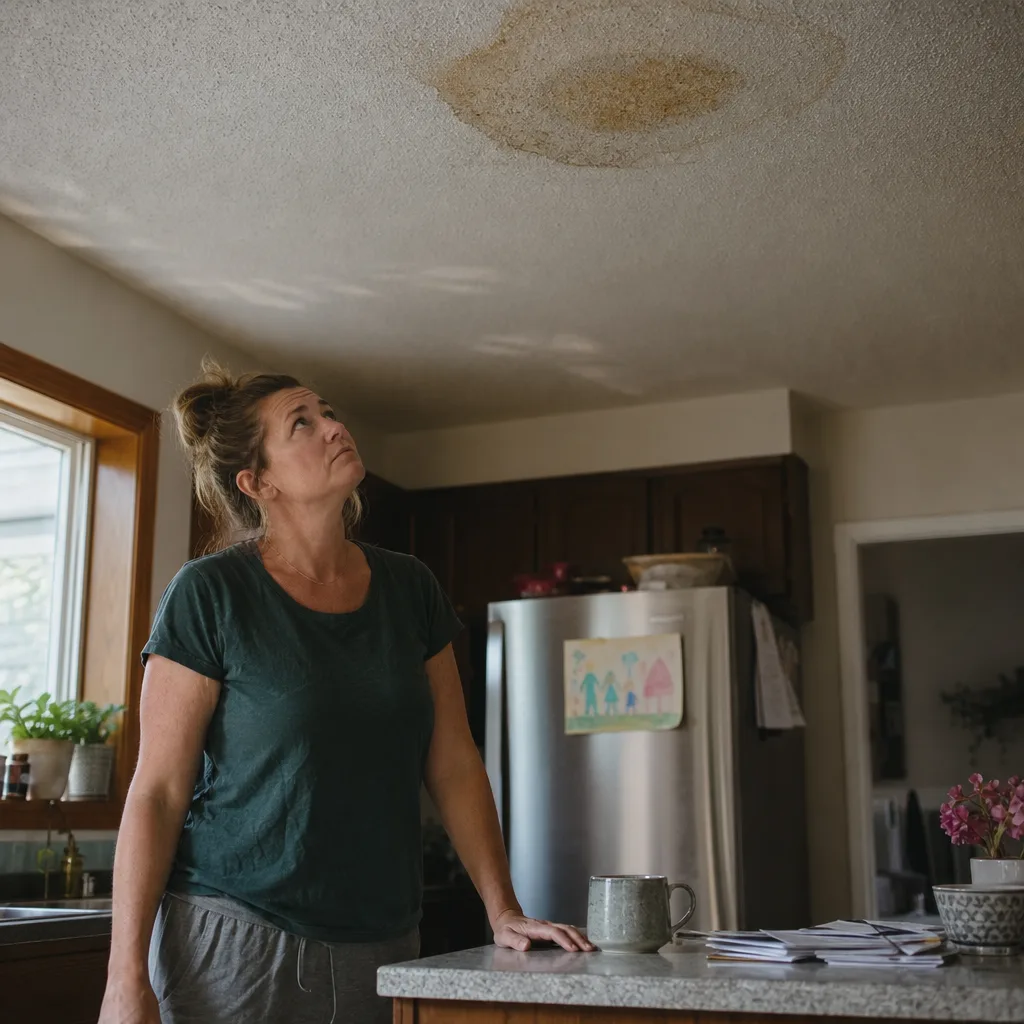
These are the things that move the cost up or down:
- Size and number of rooms. More ceiling means more scraping, more mud, and more sanding. One bedroom is a very different job from a whole main floor.
- Ceiling height and shape. A flat 8-foot ceiling is the easy case. Vaulted ceilings, stairwells, and tall entryways need more setup and take longer to reach and finish.
- Whether the popcorn was painted. Unpainted texture usually comes off more easily. A painted popcorn ceiling is harder to remove and often needs more work to get it off the board cleanly.
- What's under the texture. Nail pops, loose tape, and old patches all need fixing before the ceiling can look smooth. That's the repair line on your scope from the visit section.
- The finish you choose. A smooth ceiling takes more skim coating and sanding than a new texture like knock down, because a smooth surface shows every flaw.
- How full the room is. Furniture, built-ins, and flooring all need to be moved or covered. An empty room means less time on protection and cleanup.
- Fixtures and openings. Lights, fans, vents, and smoke alarms need to be worked around or taken down and put back.
Two other things can change the scope before any removal starts. A pre-1990 ceiling has to be tested first, and a positive result means abatement by a licensed contractor before we come back for the drywall side. Old water damage found during the moisture check gets its own line too. Both are covered above. What matters here is that they show up on paper at the start, not as an add-on halfway through.
Here's how that plays out. Say you have two bedrooms in an older Calgary bungalow. One has unpainted popcorn, and you want knock down. The other was painted over twice, and you want it smooth. They're the same size, but the second room is the bigger job, and a good quote should show you why.
Whoever you call, ask these questions before you sign:
- Did you see the ceiling in person, or is this a guess?
- Is repair to the board underneath included, or is it extra?
- What finish is the price for, smooth or textured?
- Who protects the room and does the cleanup?
- If the house is pre-1990, where does testing fit in?
A low number that skips the repair and finishing steps isn't cheaper. It just moves the cost to later, when the ceiling still doesn't look right and you're paying someone to fix it. Calgary Drywall Doctor has been doing this work in Calgary since 2004, across more than 500 projects. We're licensed, WCB-covered, and insured, and every quote is free and itemized.
📞 Call 587-417-5252 Get a Free Written Quote
Popcorn Ceiling Removal is part of our ceiling repair work in Calgary. See all drywall services.