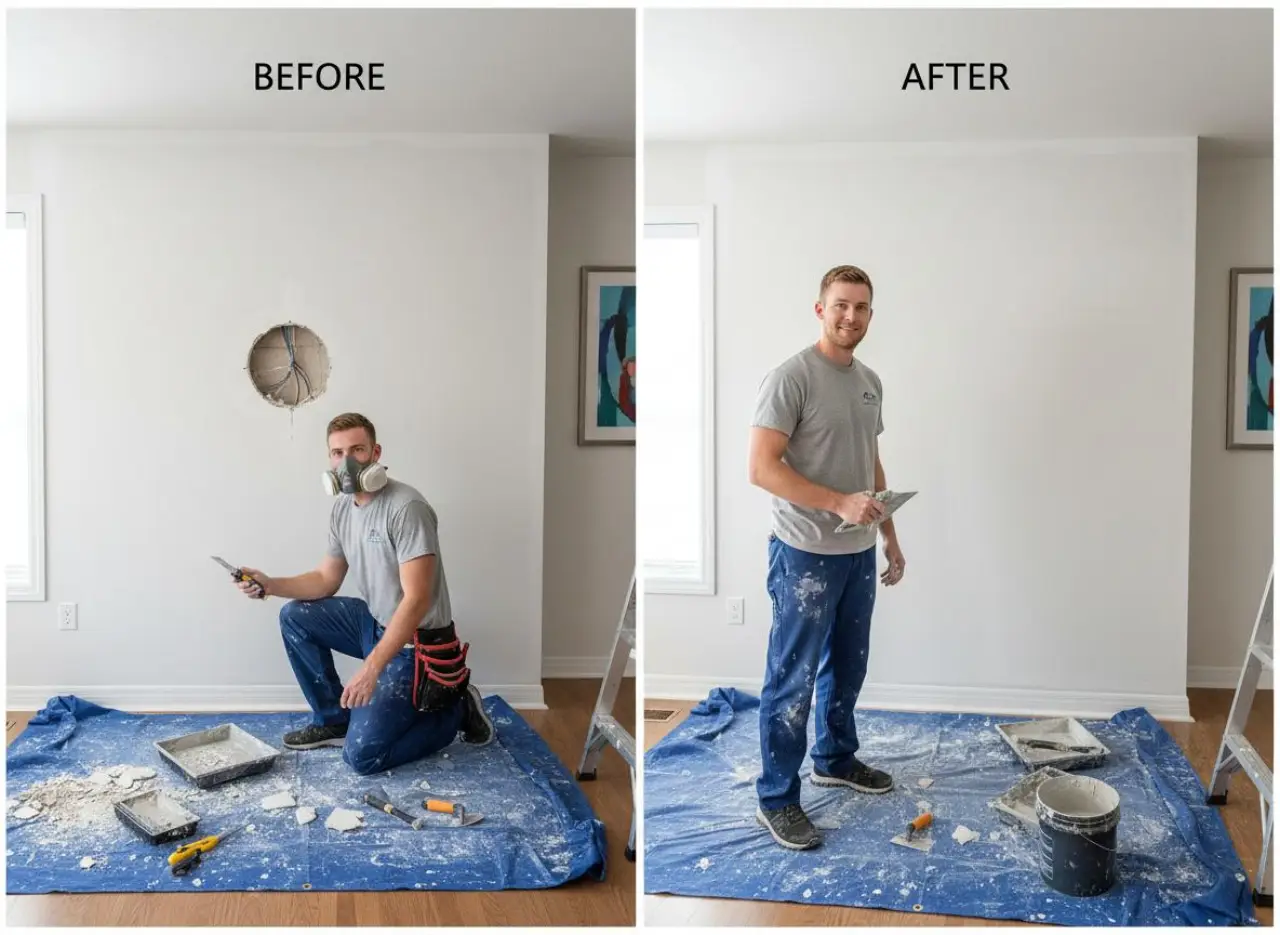
Plaster repair in Calgary is a small, specific trade, and it belongs to homes built before about 1960. Walk into a house in Inglewood, Killarney, Altadore, Bowness, Montgomery or the older streets of Lakeview and knock on the wall. If it sounds hard and dense, and the walls are thicker than a modern home, you likely have lath and plaster: thin wood strips nailed to the studs, with wet plaster pushed through the gaps so it hooks behind the lath as it sets. Those hooks are called keys, and when they break, the plaster comes loose.
Calgary Drywall Doctor repairs plaster the way it was built, when the wall is worth saving, and overlays it with drywall when it is not. We have worked on inner-city homes since 2004 and we know how to read a plaster wall: which cracks are cosmetic, which mean the keys have failed, and when the honest answer is to board over it.
This page is a child of our main drywall repair service, which covers modern drywall problems.
When You Need Plaster Repair
Cracks. Plaster cracks differently than drywall. You get fine map cracks across a surface, long diagonal cracks from door and window corners, and horizontal cracks at the ceiling line. Map cracks are usually in the finish coat only and are cosmetic. Long structural-looking cracks often mean the plaster has separated from the lath along that line.
Loose or bulging plaster. Press gently on the wall near a crack. If it moves, flexes or sounds hollow, the keys behind it have broken and the plaster is hanging on by the surrounding material. On ceilings this is a safety issue. A section of loose ceiling plaster is heavy, and it can come down.
Holes and gouges. From electrical and plumbing work, old fixtures, or furniture. Plaster holes need the lath checked and a proper base coat before a finish coat, not just a swipe of filler.
Water damage. Plaster that has been wet goes soft, stains brown and loses its bond with the lath. It usually has to come out. We meter it first, the same as with drywall.
A renovation. You are opening walls, moving outlets, or removing a wall and want the surrounding plaster to match what is left. Or you want a whole room skimmed smooth over old plaster that has been patched too many times.
The question we help you answer is patch or overlay. A wall with one or two cracks and firm plaster everywhere else should be patched. A wall with loose plaster in several places, or a ceiling that is sagging, is usually better overlaid with drywall or, in the worst cases, stripped to the studs and re-boarded.
Our Plaster Repair Process
- Sound the wall. We tap and press across the whole surface, not just the crack, to map where the plaster is firm and where it is loose. We mark the loose areas. This tells us whether we are patching or overlaying.
- Protect the room. Plaster dust is heavier and grittier than drywall dust. Plastic on everything, zip walls at the door, HEPA vacuum on the sander.
- Stabilize loose plaster. Where the plaster is sound but has lost its keys, we re-anchor it to the lath with plaster washers and screws, or with an injected adhesive on ceilings, so it stops moving before we patch over it. Loose plaster that is also crumbling comes out.
- Cut out failed sections. We cut back to firm plaster with clean edges, expose the lath, and check that the lath is sound and still nailed to the studs. Broken lath gets replaced with new strips or a piece of drywall of matching thickness.
- Base coat. For a true plaster patch we apply a bonding agent to the lath and edges, then a setting-type base coat pressed into the lath so it keys behind it. For larger holes we often set a piece of drywall to the lath thickness and treat it as the base.
- Finish coat. A smooth finishing plaster or setting compound brought flush with the surrounding wall, feathered out past the repair. Plaster walls are rarely perfectly flat, so we follow the wall rather than making the patch flat and leaving a ridge.
- Cracks. Cosmetic cracks are widened slightly into a V, filled with setting compound and covered with fibreglass mesh tape, then skimmed. Structural cracks over separated plaster are treated as loose plaster first.
- Skim and sand. On walls that have been patched many times, we skim the whole wall to a Level 5 finish so the repairs vanish. We sand with HEPA vacuum and check under raking light.
- Prime. New plaster and compound need primer before paint. We prime every repair.
Patching Plaster Versus Overlaying With Drywall
This is the decision every plaster job comes down to, so here is how we think about it.
Patch when the plaster is firm across most of the wall, the damage is local, and you want to keep the original surface. Patching keeps the wall thickness, the trim lines and the feel of an older home. It also keeps the sound and fire performance that thick plaster gives.
Overlay when the plaster is loose in several areas, the surface is badly uneven, or the ceiling is sagging. Overlaying means screwing 3/8-inch or 1/2-inch drywall through the plaster into the studs or joists, then taping and finishing it like a new wall. It is faster and cleaner than stripping, and it locks the old plaster in place. The trade-off is that window and door casings end up slightly recessed and may need to be built out, and outlets need box extenders.
Strip and re-board when the plaster is failing everywhere, the lath is rotten, or you are already opening the wall for wiring, plumbing or insulation. This is the most work, but it gives a flat, modern wall and a chance to insulate. It becomes a renovation drywall job rather than a repair.
A few facts worth knowing. Lath and plaster was the standard wall finish in Calgary homes until roughly the late 1950s, when drywall took over. Plaster is typically three coats, scratch, brown and finish, totalling around three-quarters of an inch, which is why it sounds solid. And a plaster ceiling that has separated from its lath should be treated as unsafe until it is stabilized or removed.
Textured plaster ceilings and any stipple applied before about 1990 may contain asbestos. We ask for a lab test before disturbing them. If it comes back positive, a licensed abatement contractor removes it before we work.
Plaster Repair Cost in Calgary
We give a free, written, itemized quote after sounding the wall. No prices on this page because plaster jobs vary more than most. The factors:
- Patch or overlay. Patching a few cracks is a short visit. Overlaying a room is a boarding and finishing job. Stripping is a renovation.
- Amount of loose plaster. Stabilizing and re-keying takes time per square foot.
- Ceiling versus wall. Ceiling plaster is heavier, more often loose, and slower to work overhead.
- Lath condition. Broken or rotten lath has to be replaced before any plaster goes on.
- Finish expectations. Matching an old hand-trowelled finish is different from skimming a wall to Level 5 smooth.
- Trim and outlets. Overlays may need casings built out and box extenders installed.
Why Choose Calgary Drywall Doctor
Most drywall crews do not want plaster work. We do, and we have since 2004. More than 500 projects completed, licensed, WCB-covered and insured, with a written workmanship warranty on every repair.
We sound the whole wall before we quote, so you are not paying for a patch that falls off next spring because the plaster around it was loose. We use setting compounds and bonding agents that stick to plaster, not just all-purpose mud. We give you a straight answer on patch versus overlay. And every finish is checked under raking light, which matters even more on old walls that were never flat to begin with.
Dust control is built in. Plaster dust is unpleasant, and our plastic, zip walls and HEPA vacuuming keep it out of the rest of your home.
For modern drywall cracks, nail pops and holes, see our drywall repair page. For a plaster wall you want skimmed smooth from corner to corner, our skim coating service does exactly that. Plaster ceilings that need to come down and be re-boarded fall under ceiling repair.
Plaster repair is part of our drywall repair service in Calgary, which also covers water damage, Poly-B access holes, texture matching, cracks and nail pops.