Knockdown Texture vs. Popcorn Removal vs. Repair: Which One You Need
If the ceiling in your Calgary home is smooth or has a flat texture you want to change, you need a new knockdown finish. If it has popcorn, that has to come off first, and pre-1990 popcorn needs a lab test before anyone touches it. If you already have knockdown and only a small area is damaged, a repair with matched texture is usually all you need.
These three jobs get mixed up a lot because they all end with a textured ceiling. They're different amounts of work, though, and the right one depends on what's up there now and why it looks the way it does.
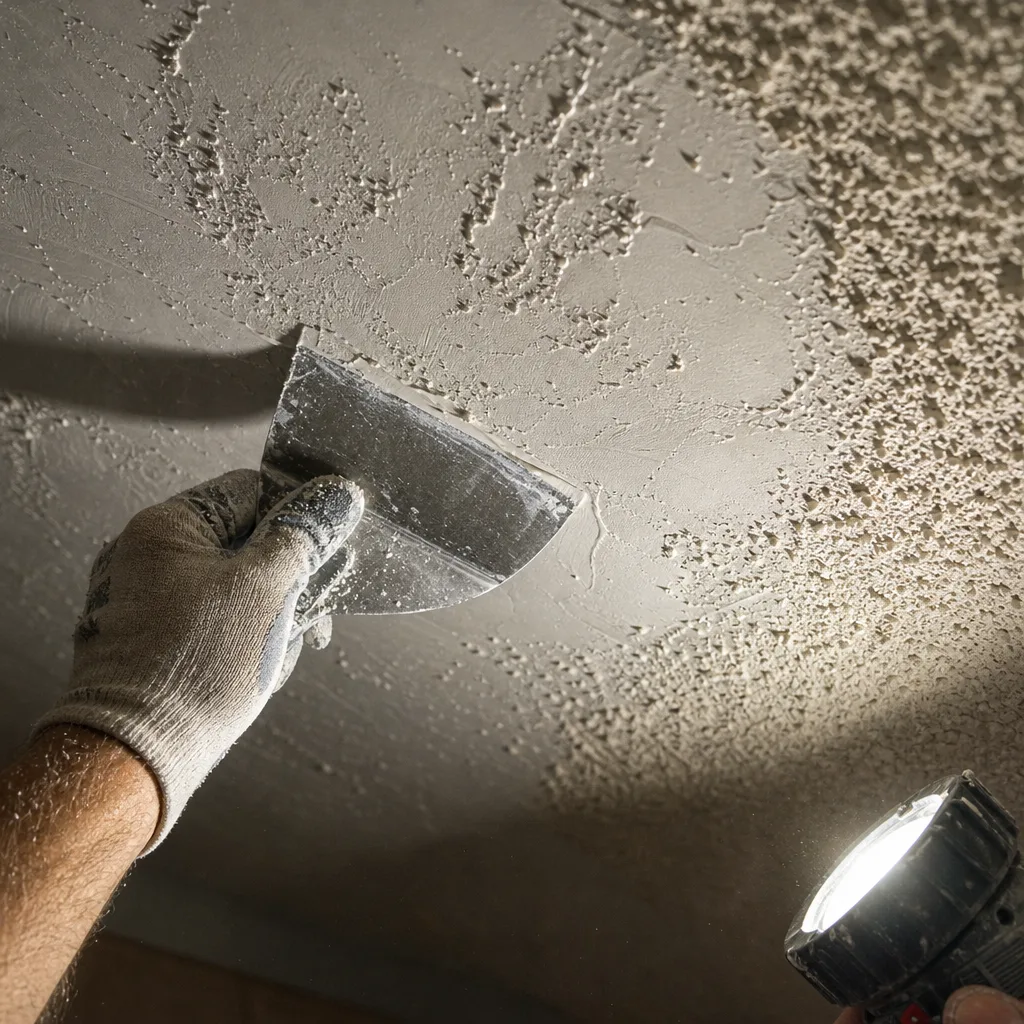
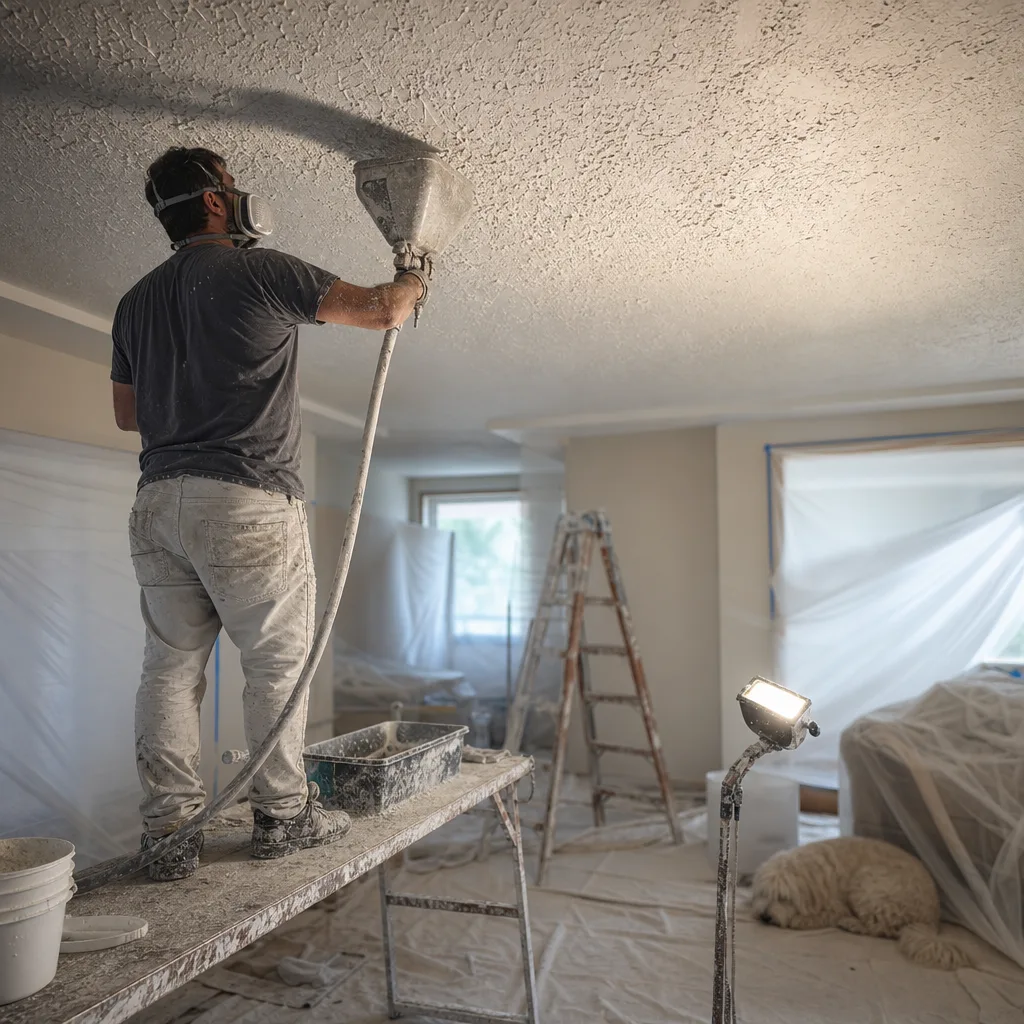
Knockdown is a fresh texture. We spray or splatter drywall mud onto the ceiling, let it set up a little, then flatten the peaks with a wide knife. You get that soft, mottled look that hides small flaws in the board and catches light gently. This is the job when your ceiling is plain drywall, an older flat finish, or a patched-up surface you want to look like one even ceiling again.
If you have popcorn, knockdown can't just go on top. The popcorn has to come off, the ceiling gets skimmed where it needs it, and then the knockdown goes on. That's two jobs in a row, so the scope is bigger. One rule comes before anything else here. If your home was built before 1990, the popcorn has to be lab tested first. If the result comes back positive, a licensed abatement contractor handles the removal, not us. Once the ceiling is clear, we can do the knockdown.
Repair is the smallest job. You already have knockdown, and one spot is the problem: a water stain, a hole from an old light fixture, a crack, or a nail pop. In that case we fix the damage, rebuild the texture to match what's around it, and leave the rest of the ceiling alone.
- Smooth, flat, or uneven ceiling you want refreshed: new knockdown texture.
- Popcorn ceiling you want gone: popcorn removal first, then knockdown. Test first if the house is pre-1990.
- Knockdown ceiling with one damaged area: patch and match the texture.
- Stain or crack that keeps coming back: find the cause first, then decide.
Here's where you might not need us for much. A single hairline crack in otherwise good knockdown is a small repair, not a full re-texture. Don't let anyone talk you into redoing the whole ceiling for it. And if the texture is fine and you just don't like how it looks after years of yellowing, fresh paint may be all you need. That isn't texture work at all.
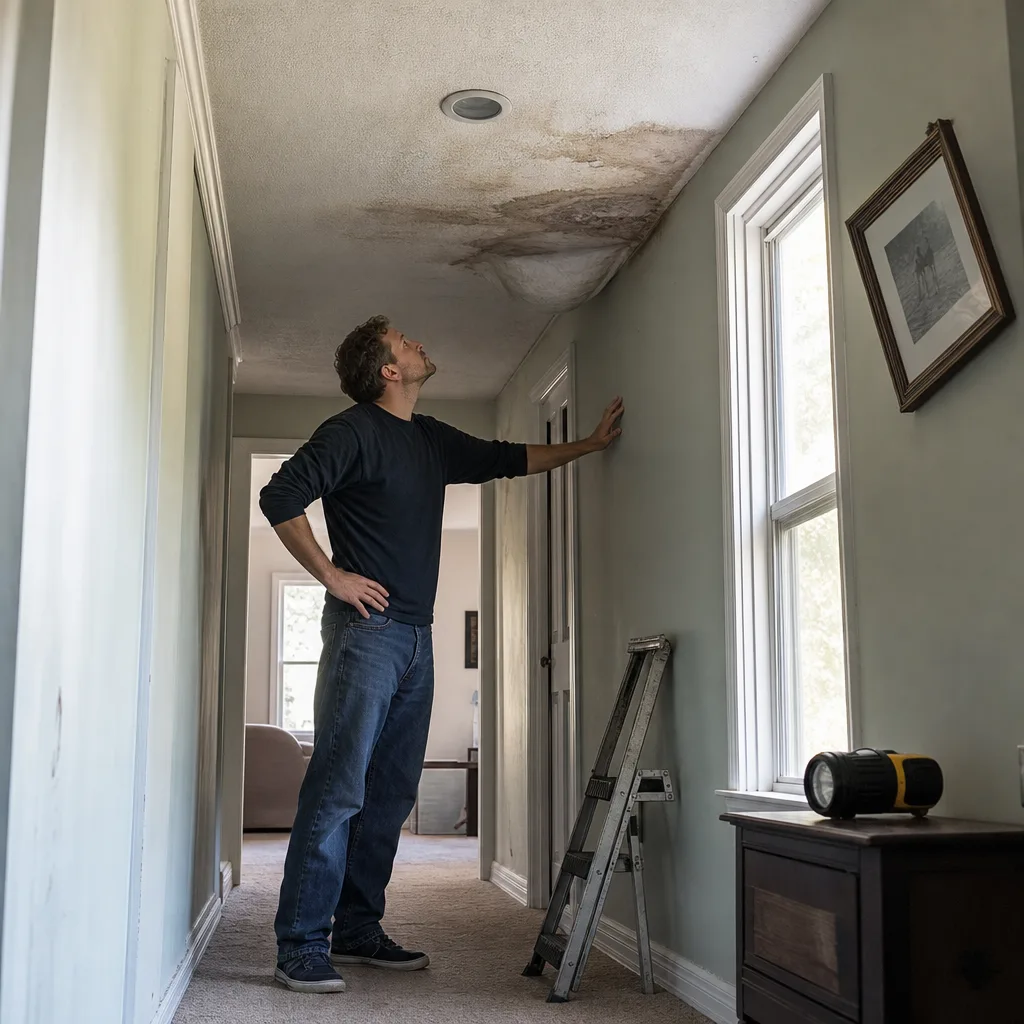
That last bullet matters most. A brown ring on the ceiling or a crack that keeps reopening is telling you something. New texture over a wet spot or a moving joint will fail the same way the old finish did. That's why we check for moisture and damage at the quote before we recommend anything. Nail pops and cracks after a newer home's first Calgary winter are also something we've dealt with since 2004.
You don't have to figure this out alone. Every quote from Calgary Drywall Doctor is done in person, with the ceiling measured and checked, and you get a free itemized written scope. It shows exactly which of these jobs your ceiling needs, so you can see what you're paying for and what you're not.
Why Moisture Gets Checked Before Any Boarding Starts
Drywall and mud are made to stay dry. When water gets into a ceiling, the board softens, the paper face can lift, and the gypsum inside loses strength. Knockdown texture is a thin layer of mud sitting on that surface. If the surface underneath is damp or weak, the texture has nothing solid to hold on to.
Here's what that looks like a few months after the job if moisture gets skipped:
- A brown or yellow ring bleeds right back through fresh texture and paint.
- The texture loosens, bubbles, or flakes off in patches.
- The board sags between the framing, and that shows up as a soft dip across the ceiling.
- Joints and screw heads pop because the board around them has gone soft.
- A musty smell or dark spotting points to mold behind the surface.
None of those problems get fixed by doing the texture again. The only fix is to stop the water, replace whatever board is damaged, let things dry out, and then finish. That's why we check for moisture before any boarding starts, and why our estimator checks for moisture or damage when measuring for your quote. It costs you nothing at that stage. Finding it after the ceiling is textured means paying for the work twice.
Ceiling water doesn't always come from an obvious leak. The usual places to look are a bathroom or laundry room above, a plumbing line running through the ceiling, a roof leak, or a spot where an old fixture let water in. In Calgary, the attic is worth a thought too. Long cold stretches followed by a chinook can melt frost in a poorly vented attic fast, and that water can drip onto the ceiling below. In a basement, the ceiling sits right under kitchens, bathrooms, and supply lines, so an old stain there needs a closer look before it gets covered.
A dry stain isn't always a finished problem. A ring left over from a leak that was fixed years ago is very different from a ring that's still growing. Checking tells you which one you have before you spend money on texture.
So what happens if the check finds moisture? We tell you straight, and it goes on your written scope. If the water is still coming in, the source has to be fixed first by the right trade, like a plumber for a leaking line or a roofer for a roof leak. We aren't a restoration contractor, and we won't pretend a wet ceiling is ready for texture. Once the source is fixed and the area is dry, we cut out and replace any damaged board, tape and mud it, and then apply knockdown across the ceiling so the repair blends in.
If the check comes back clean, good. You go ahead knowing the new texture is going onto sound, dry board, and that's what lets it last.
Not sure what your project needs?
We look at the job in person and put the scope and price in writing. No obligation.
Testing Older Ceiling Texture Before Any Work Begins
If your ceiling texture went up before 1990, it gets lab tested before anyone scrapes, sands, cuts, or patches it. You can't tell what's in old texture by looking at it. Popcorn, an old knockdown, or a swirl finish can all look harmless and still contain asbestos, which was used in some ceiling textures back then. A lab test gives you a clear yes or no, so the job starts with facts instead of a guess.

This is the same idea as checking for moisture before boarding. You find out what the ceiling is made of before you put new work on it, not after.
People often assume testing is only for popcorn removal. It's about the age of the texture, not the type of job. Here are some jobs that disturb old texture:
- Scraping off popcorn so a new knockdown finish can go on
- Cutting out a water-damaged section of an older textured ceiling
- Opening the ceiling to move or add a light fixture
- Sanding or skimming an old finish to get a flat base for new texture
- Patching and matching texture around a crack or nail pop
Each of these breaks into the old surface. That's why the test comes first, even on a small repair.
Not sure when your ceiling was done? Start with the year the house was built. You can usually find it on your purchase papers or your property assessment. Keep in mind that the house's age and the texture's age aren't always the same. A basement developed later or an addition built later may have newer ceilings than the main floor. A pre-1990 house might also have had its ceilings redone since then. If you can't confirm when the texture went up and the house is older, treat it as pre-1990 and test it.
A test needs only a small sample of the texture, which goes to a lab. Then the job takes one of two paths.
- Negative result: the work goes ahead as written in your scope, whether that's removal, repair, or a full knockdown finish.
- Positive result: a licensed abatement contractor handles the removal. We don't. Once the ceiling is cleared, we come back for the finishing and the knockdown texture.
On cost, here's how it usually works across the industry. Lab testing is its own line item, separate from the drywall and texture work. If the result is positive, the abatement contractor prices and bills the removal on their own. When you're comparing quotes on an older home, ask each contractor how testing fits into their plan. A quote that skips testing on a pre-1990 ceiling isn't cheaper. It just leaves out a step.
Testing adds a little time to the front of the job, so plan for it. If your home is older, mention it when you book your in-person quote. That way your itemized written scope shows where testing comes in. We can also lay out what each result would mean for your ceiling before you commit to anything.
Waiting a few days for a lab result can feel like a delay. It costs far less than finding out halfway through a scrape that your living room ceiling should never have been disturbed.
What Happens During a Knockdown Ceiling Job
A knockdown ceiling job has four parts: protect the room, fix the surface, apply the texture, and check the result. The texture itself is the quickest part. Most of the work that decides how your ceiling looks in five years happens before any texture goes up.
By the time work starts, the moisture check and any testing for older texture are already done and written into your scope. Day one begins with the room.
- Protecting your space: Texture mud travels. Floors, walls, windows, and anything left in the room need to be covered and sealed off. Our crew is trained in dust control, and they're the people working in your home day to day.
- Fixing the surface: Cracks get opened up and filled. Nail pops get reset. Loose tape gets cut out and redone. Any board marked as damaged in your scope gets replaced and taped. Texture hides small flaws, but it won't hold a bad joint together.
- Applying the knockdown: The mud goes on and gets flattened the way we described earlier. The whole ceiling is done in one go, so the pattern stays even from wall to wall.
- Drying: The texture needs time to dry fully before primer and paint go on.
Calgary's air plays a part here. It's dry most of the year, and in winter the furnace dries it out even more. Mud sets up faster in that air, and the timing of the knockdown pass makes a visible difference. If you flatten the peaks too late, they tear and drag. If you flatten them too early, they slump into flat smears. A big room means working in sections and keeping a steady pace, so one corner doesn't look different from the rest.
Our lead finisher handles the finishing work personally. On larger basement and full-renovation projects, a boarding and taping crew works alongside our lead finisher. That crew is also trained in fire-rated assemblies and Level 5 finishing, which matters when the knockdown ceiling is part of a bigger basement build and not a single room.
Once the texture is dry, we inspect the ceiling under raking light. A light held low and at an angle across the surface throws long shadows. Ridges, missed joints, and patches where the pattern changes all show up in that light. You'd never spot most of them with the overhead light on. Then one day the afternoon sun comes through a west window and they're all there. Raking light finds them while the tools are still out, not after the furniture is back in.
After that, the ceiling is ready for primer and paint. Fresh knockdown is porous, so it needs a primer before the finish coat. Otherwise the paint can soak in unevenly and look blotchy.
Your part is simple. Clear out what you can before the start date, and keep pets and kids out of the work area while mud is going up. If something comes up partway through, like a question about a light fixture or a spot you're unsure about, you can contact us directly. You won't have to go through an office to get an answer.
Want a firm number on your knockdown ceiling job?
Get a free, itemized written quote before any work starts.
Why Texture Pattern Consistency Is the Biggest Risk in This Job
The biggest risk with knockdown isn't the texture falling off. It's the texture not matching. Your eye reads a ceiling as one big surface. If one patch has bigger splats, flatter tops, or tighter spacing than the rest, it stands out every time you look up, and it stays that way until someone redoes it.
Small changes in how the mud goes on make a big difference in how it looks. These are the main things that make one patch look different from the next:
- Mud thickness. Thin mud spreads into small, flat splats. Thick mud leaves bigger, raised ones.
- Splat size and spacing. Some ceilings have big, open splats. Others have small, tight ones close together.
- When the peaks get knocked down. That timing changes the look, as we covered in the job steps above.
- Knife angle and pressure. A light pass leaves more height. A heavy pass presses the texture almost flat.
- Age and paint. Years of paint round off old texture. Fresh texture beside it can look sharper and brighter, even if the pattern is right.
Repairs are where this matters most. Say you patch the hole left by an old light fixture. It looks fine at night with the lamps on. Then winter comes. Calgary's winter sun sits low in the sky for months, and it shines almost flat across ceilings near south and west windows. That light acts a lot like a raking light, and a patch that doesn't match shows up like a stamp.
Good matching starts with reading the old texture before any mud goes up. A careful finisher tests the mix and the splat on a scrap of board first. Then they spread the new texture past the edge of the repair and break up the outline, so there's no hard square for your eye to catch. Priming the patch matters too. Without primer, the paint can dry with a different sheen over the new mud, and the patch shows even when the pattern is right.
Sometimes a patch just won't blend. The old texture may be covered in many coats of paint. It may be an odd pattern. Or it may already have three or four old repairs that don't match each other. In those cases, redoing the whole ceiling is often the honest answer. It costs more than a patch, but it gives you one even surface instead of another spot to look at. On the other hand, a closet or a small hallway ceiling that nobody looks at much may be fine with a careful patch. That's your call, and it should be laid out as a clear choice, not decided for you.
You can check the work yourself. Turn off the overhead light and hold a flashlight flat against the ceiling. Look across the surface, not straight up. If the pattern runs even from wall to wall, the job was done right. This is the same idea behind the raking-light inspection we do before calling a ceiling finished.
📞 Call 587-417-5252 Get a Free Written Quote
Knockdown Ceilings is part of our ceiling repair work in Calgary. See all drywall services.