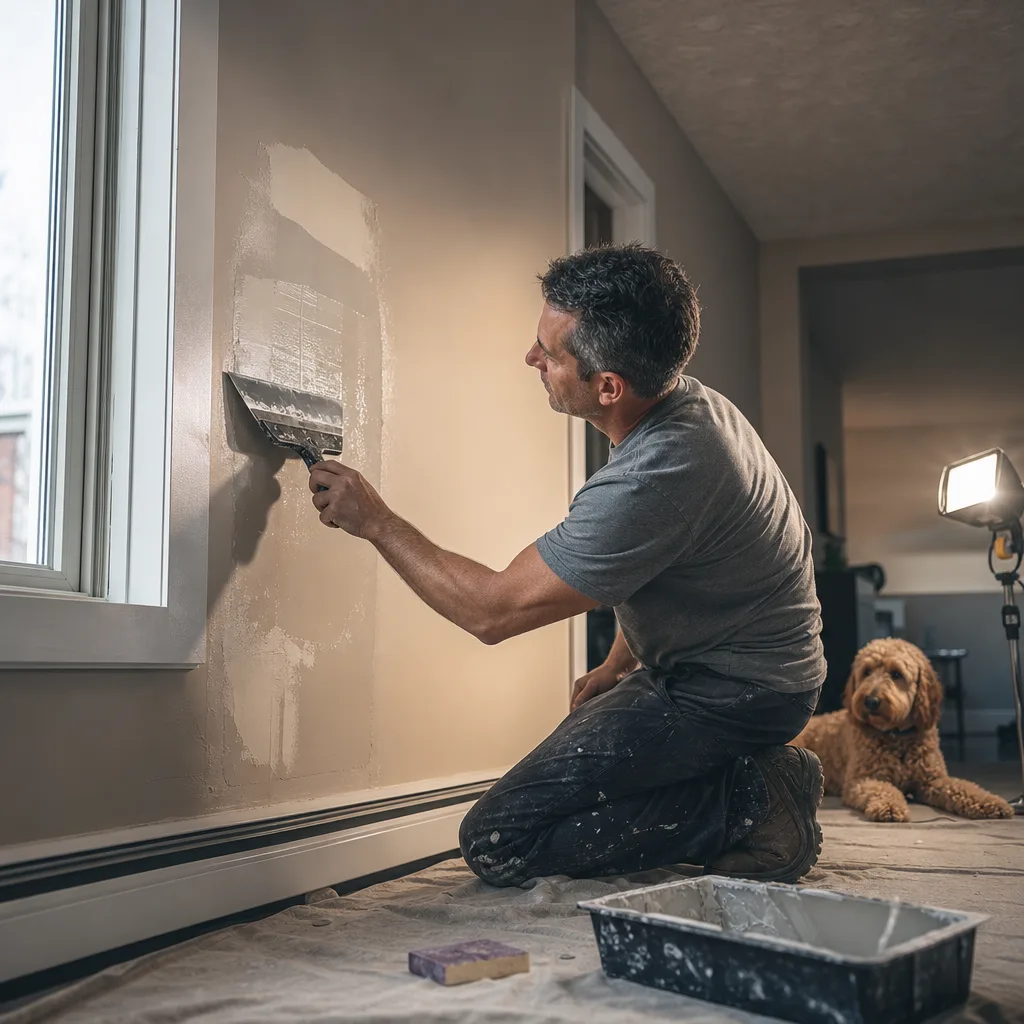
A Lasting Repair Starts With Finding the Cause, Not Just Covering the Crack
A crack, nail pop, or stain on your drywall usually points to something happening behind or around it. If the repair doesn't deal with that cause, the same mark tends to come back in the same spot. That's why we check for moisture and look at what moved before we patch anything.
Anyone can smear mud over a crack and paint it. It'll look fine for a while. Then the line shows up again in the same place, because whatever cracked the wall is still at work. A residential drywall repair that lasts deals with why the damage happened first. Only then does it fix the surface you see.
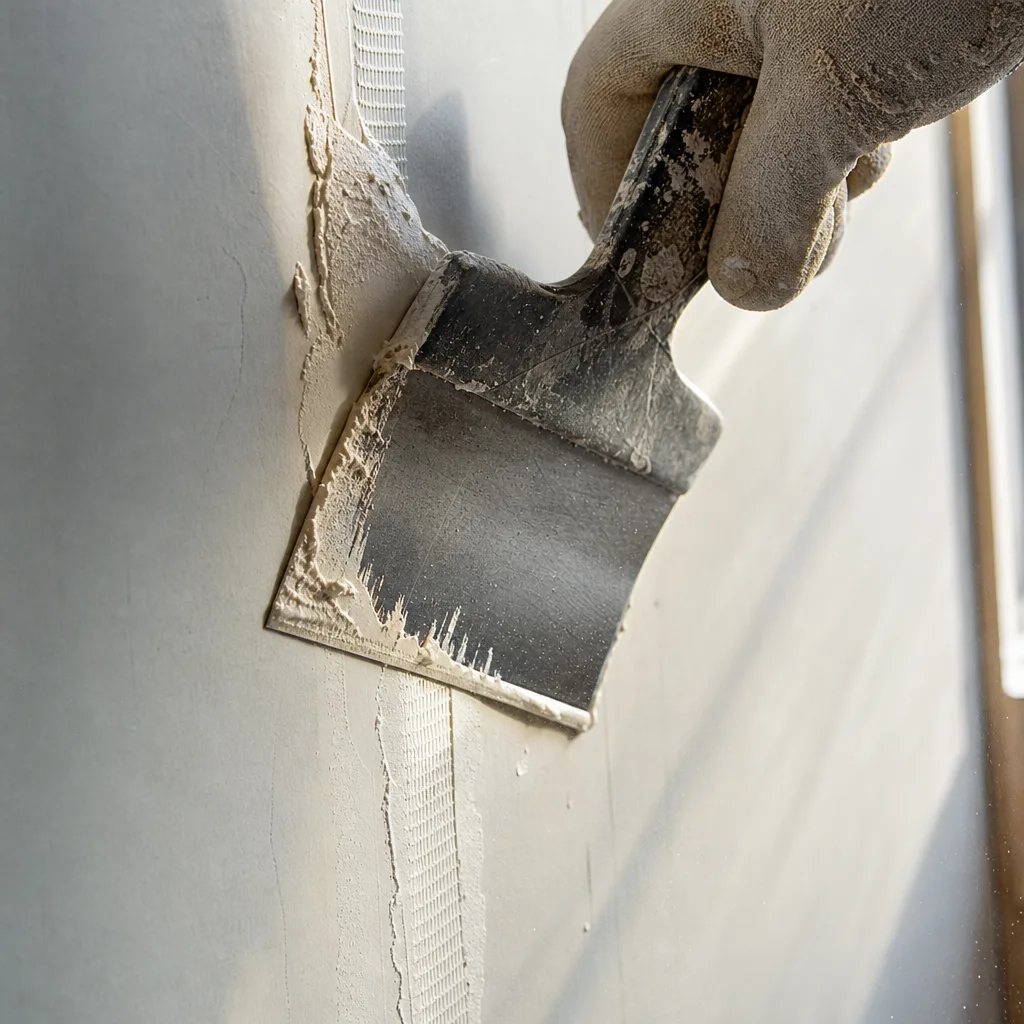
Here's what common drywall damage is often telling you, and what a real fix looks like:
- Nail pops: Small round bumps or rings, often in newer homes. Framing lumber dries and shrinks during the first heating seasons and pushes fasteners out. A lasting fix secures the board again and then refinishes the spot. Sanding the bump flat isn't enough.
- Cracks at door and window corners: Movement in a house tends to show up at these corners. A lasting fix uses new tape bedded properly in compound. Filling the crack with mud alone won't hold.
- Water stains, soft spots, or bubbling tape: These are signs of moisture. Have the source found and fixed first, which may mean calling a plumber or roofer. Patching over a wet wall only hides the problem.
- Holes from doorknobs or furniture: The cause is plain impact. Patch the hole, then add a door stop so it doesn't happen again.
- Cracks that keep coming back or get wider: These may point to movement beyond the drywall. Have that looked at before you pay for another cosmetic patch.
Say you notice a hairline crack running up from the corner of a bedroom door. It's been patched once already and it's back. That second appearance tells you the first fix covered the symptom. A proper repair starts by asking why that corner keeps moving.
We do every quote in person. We measure the job and check for moisture or damage before anything else. You get an itemized written scope, so you can see each part of the repair and why it's included. We check for moisture before boarding because new drywall over a damp cavity just traps the problem behind a clean surface.
Once the finishing is done, we inspect the work under raking light. That's a light held low and off to one side so it skims across the wall. It shows ridges, edges, and dips you'd miss with only the ceiling lights on. It's close to how late-day sun from a window crosses your wall, which makes it a fair test of how the repair will look when you're living with it.
Common Drywall Problems in Calgary Homes
Calgary is hard on drywall. Winters are long and dry. Chinooks can swing the temperature by 20 degrees or more in a day. Snow melts and then refreezes. Your house moves a little with every one of those changes, and the drywall shows it. Here are the problems that tend to come from living here, and what each one means for the fix.
- Cracks where the ceiling meets an interior wall on the top floor: These often open in winter and close up again in summer. A common cause is truss uplift. In the cold, the roof trusses can bow upward and lift the ceiling drywall off the wall below. More mud just cracks again next winter. The fix has to let the ceiling move without tearing the joint.
- Hairline cracks at seams and corners after a chinook: Fast swings in temperature and humidity make wood framing and drywall swell and shrink. Weak joints split first. Like the door corner cracks covered above, these need proper tape, not just filler.
- Nail pops and seam lines in newer homes: Calgary's dry winter air speeds up the shrinking of new framing. That's why so many pops show up after a home's first or second heating season.
- Stains on top-floor ceilings and the tops of outside walls: Snow on the roof can melt during a chinook and refreeze at the edge of the roof. That can form an ice dam, and water backs up under the shingles. Once a roofer has dealt with the leak and the area is dry, the ceiling can be repaired.
- Damage in finished basements: Basement walls sit against cold concrete, and small leaks or high humidity can go unnoticed for months. Drywall that touches the floor can soak up water from a minor flood. Soft, swollen, or musty board needs to come out. Painting over it won't fix it.
Older Calgary homes bring their own issues. Some have plaster walls, which crack and come loose in a different way than drywall. That's why plaster repair is its own service with its own methods. Many homes built before 1990 also have textured or popcorn ceilings. Those textures have to be lab tested before anyone disturbs them. If a test comes back positive, a licensed abatement contractor handles the removal. Calgary Drywall Doctor doesn't remove asbestos, and we won't sand or scrape an untested ceiling.
A quick way to read your own wall: if the crack changes with the seasons, the house is moving. If there's a stain, water got in. If the board is soft, water is still there or did real damage. Each one points to a different first step, and that step comes before any patch.
None of these problems are rare in a city with our weather. They're easy to fix badly, though, because the surface looks like a simple patch job. Knowing which Calgary problem you're dealing with tells you whether you need a quick repair, a repair that allows for movement, or a call to a roofer or plumber first.
Not sure what your project needs?
We look at the job in person and put the scope and price in writing. No obligation.
When It's Urgent and When It Can Wait
Most drywall damage isn't an emergency. A few kinds are, and some jobs are better done later, after the house has finished moving. Here's how to sort out where yours fits.
Don't wait on these:
- A ceiling that sags, bulges, or feels heavy with water. Wet drywall loses its strength. The leak gets dealt with first, as covered above, but the board itself shouldn't be left hanging.
- Board that's soft, crumbly, or smells musty. That board is still holding water or has already been ruined by it. The longer it stays, the more it can spread into the framing and the board around it.
- A crack that's getting wider week by week. A crack that moves with the seasons is one thing. A crack that keeps growing points to movement beyond the drywall, and that deserves a look before anyone patches it.
- Damage to a textured ceiling in an older home. If the texture went up before 1990, it needs a lab test before anyone touches it. Don't scrape or sand loose bits to tidy it up.
These can wait, and sometimes should:
- Nail pops and seam lines in a home that's only a year or two old. The framing is still drying out. If you fix every pop now, more may show up next winter. Waiting until after the second heating season often means you fix them all in one visit instead of two.
- Top-floor ceiling cracks that open in winter and close in summer. These cracks are cosmetic. Nothing is failing. Plan the repair, but there's no rush, and the fix has to allow for movement no matter when it's done.
- Hairline cracks that haven't changed. Put a light pencil mark at each end of the crack and write the date beside it. Check it again in a month or two. If it hasn't grown past your marks, it can wait until you're ready to paint the room.
You can probably do these yourself:
- Small nail and screw holes from pictures or shelves. Spackle, a putty knife, and light sanding will cover them.
- Shallow dents and dings where the paper face isn't torn.
- A small doorknob hole, if you're comfortable with a patch kit from the hardware store. Add a door stop so it doesn't happen again.
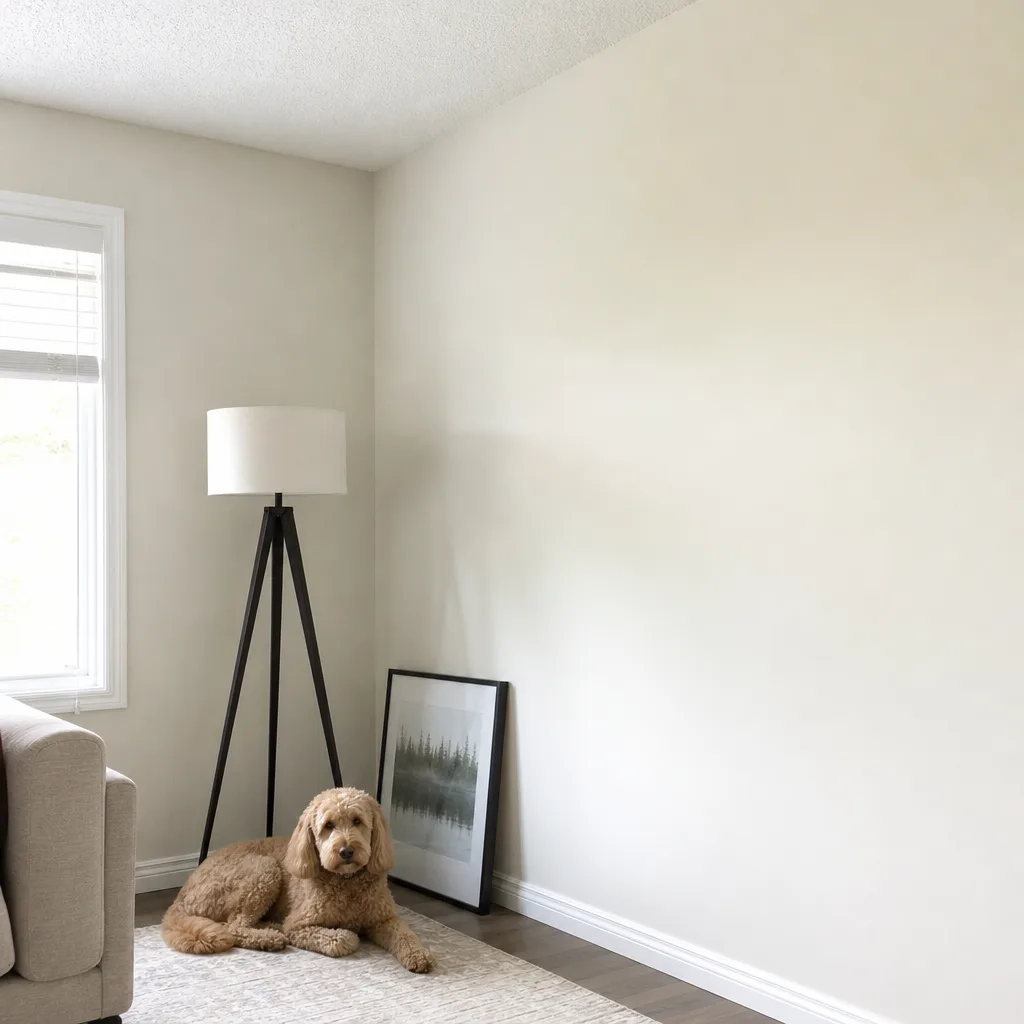
Where people get stuck is the finish. Filling a hole is easy. Making it vanish under late-day light from a window is the hard part. If your patch keeps showing a ridge or a halo after you paint, that's when a second set of hands makes sense. Up to that point, it's honest DIY work.
One more timing tip. If you're planning to paint, sell, or finish a basement, get the drywall repaired first. Paint shows every flaw underneath it. Repairing after you've painted means repainting that wall again.
If you can't tell which group your damage falls into, that's normal. A stain, a soft spot, and an old crack can all look alike from across the room. That's why we check for moisture and measure in person before we write up any scope. Your written quote should tell you plainly whether the job needs doing now, can wait, or is something you can handle yourself.
When a Small Hole Doesn't Need a Professional
Plenty of holes in a wall are honest weekend jobs. You don't need us for a few anchor holes or a small dent, and we'd rather tell you that up front. The real questions are how big is too big, and how to make your patch disappear instead of leaving a bump.
Size tells you most of what you need to know:
- Smaller than a dime: lightweight spackle and a putty knife. One or two thin passes is usually all it takes.
- Up to the size of a golf ball: spackle or premixed joint compound. Plan on two or three coats, because a deep fill shrinks as it dries.
- Fist-sized, like most doorknob holes: the hole needs something behind the mud to hold it. A self-adhesive mesh patch or a store-bought patch kit works.
- Bigger than your hand: this usually means cutting in a new piece of drywall with backing behind it. That's the point where most homeowners decide it isn't worth the trouble.
A few habits make a small patch disappear:
- Go thin and wide. Each coat should spread a little farther past the hole than the last one, and the edges should feather out to nothing. A narrow, thick patch is what leaves a visible hump.
- Let each coat dry all the way. Calgary's dry winter air makes the surface feel dry fast, but a thick fill can still be soft underneath. Sanding it too early tears it.
- If the paper face is torn and fuzzy, seal it with primer before you add compound. Mud spread over raw paper tends to bubble.
- Prime the patch before you paint. Bare compound soaks up paint differently than the wall around it. Even with the exact same color, you'll see a dull spot.
- Before painting, hold a flashlight low and off to the side of the patch. If it casts a shadow, sand lightly or add one more thin coat.
Stop and rethink the job if any of these apply:
- The hole is near an outlet or switch, or anywhere wires or pipes could be running. Don't cut the opening bigger until you know what's behind it.
- It's on the ceiling. Working overhead is harder, the patch has gravity working against it, and ceiling texture is tough to match.
- The wall or ceiling is textured. Matching texture is a separate skill from filling a hole. If it's an older ceiling texture, the testing rule covered earlier comes first.
- The edges crumble, the board feels soft, or the spot smells musty. That's a moisture problem showing up as a hole, not a small hole.
- You've already patched this same spot once. Something keeps hitting it or moving it, and another patch won't change that.
If none of those fit and your patch looks smooth under that low flashlight, you're done. You did the job right, and that's a good result.
Want a firm number on your residential drywall repair job?
Get a free, itemized written quote before any work starts.
What Happens During a Repair Visit
Here's how a repair moves from your first call to the last look at the wall. You deal with us directly the whole way through, so you're not passed between people or left guessing who to ask.
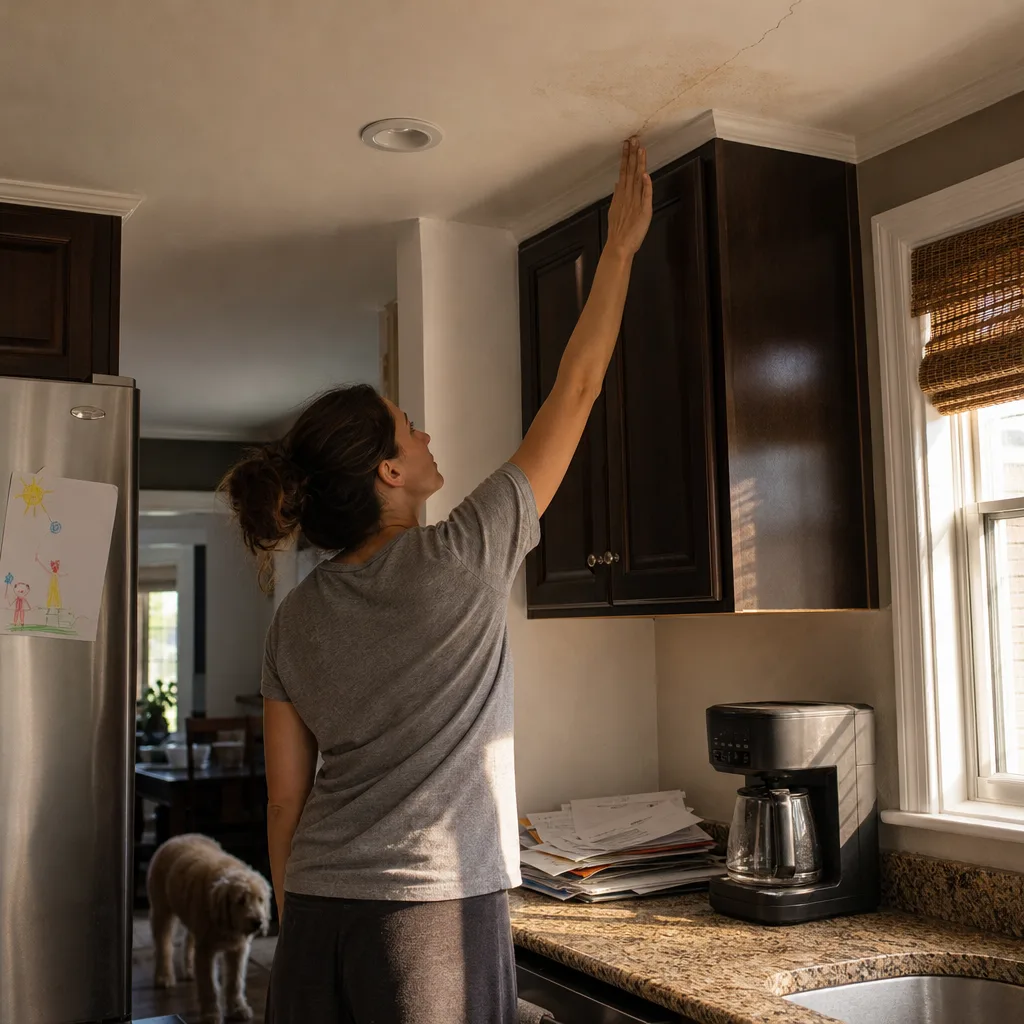
- The quote visit. Our estimator comes to your home, measures the job, and does the moisture and damage check described earlier. Nothing gets cut or patched that day. You get a free, itemized written quote that lists each part of the job. You can ask about any line, compare it with other quotes, or decide to wait.
- Sorting out the cause. If the quote turns up a leak or wet board, that gets fixed first. This may mean a plumber or roofer comes in before we do. If the damage comes from seasonal movement, the written scope says so, and it explains how the repair will allow for it.
- The repair itself. Our lead finisher handles the finishing work. On larger basement and full-renovation jobs, a boarding and taping crew works alongside our lead finisher. The crew is trained in dust control, fire-rated assemblies, and Level 5 finishing.
- Drying time between coats. Joint compound goes on in layers, and each layer has to dry before the next one. Calgary's dry air speeds up the surface, but deep fills and new tape joints still need time. A repair that looks like an afternoon job can take more than one visit. Rushing it is how you end up with shrink cracks and ridges.
- The final check. When the finishing is done, we do the raking-light inspection, and then we walk the work with you.
Say a stain shows up on your top-floor ceiling after a chinook. At the quote visit, the moisture check tells you whether that spot is still wet. If it is, the first line on your written scope points you to a roofer, not a drywall patch. If it's dry and the roof has already been fixed, the repair can go ahead. Either way, you know why each step is there before anyone picks up a knife.
You can make the visit go smoother with a few easy steps:
- Move furniture a few feet away from the damaged wall or out from under the ceiling spot.
- Take down pictures, mirrors, and shelves near the repair.
- Tell us the history. Has this spot been patched before? When did you first notice it? Does it look worse in winter? That history is often the quickest clue to the cause.
- Keep pets and kids out of the work area while compound is wet.
During the job, you can call us directly with questions. You don't have to wait for the next visit. Calgary Drywall Doctor is licensed, WCB-covered, and insured. That matters, because people are working inside your home day to day.
📞 Call 587-417-5252 Get a Free Written Quote
Residential Drywall Repair is part of our drywall repair work in Calgary. See all drywall services.