Need Drywall Ceiling Installation?
We look at the job in person and put the scope and price in writing. No obligation.
Full Installation vs. Ceiling Repair: How to Tell Which You Need
Most small ceiling problems, like nail pops, a hairline seam crack, or one dry stain, only need a repair. New drywall makes sense when the board is sagging, soft from water, cracked across the room, or not there at all. The deciding factor is the condition of the board and what caused the damage, not how bad the surface looks.
A ceiling can look awful and still only need a repair. It can also look fine from the floor and need to come down. What decides it is what's going on with the board itself, and whatever caused the problem in the first place.
You probably don't need a new ceiling if you see any of these:
- A few nail or screw pops showing through the paint.
- A thin crack along one tape seam or at a corner.
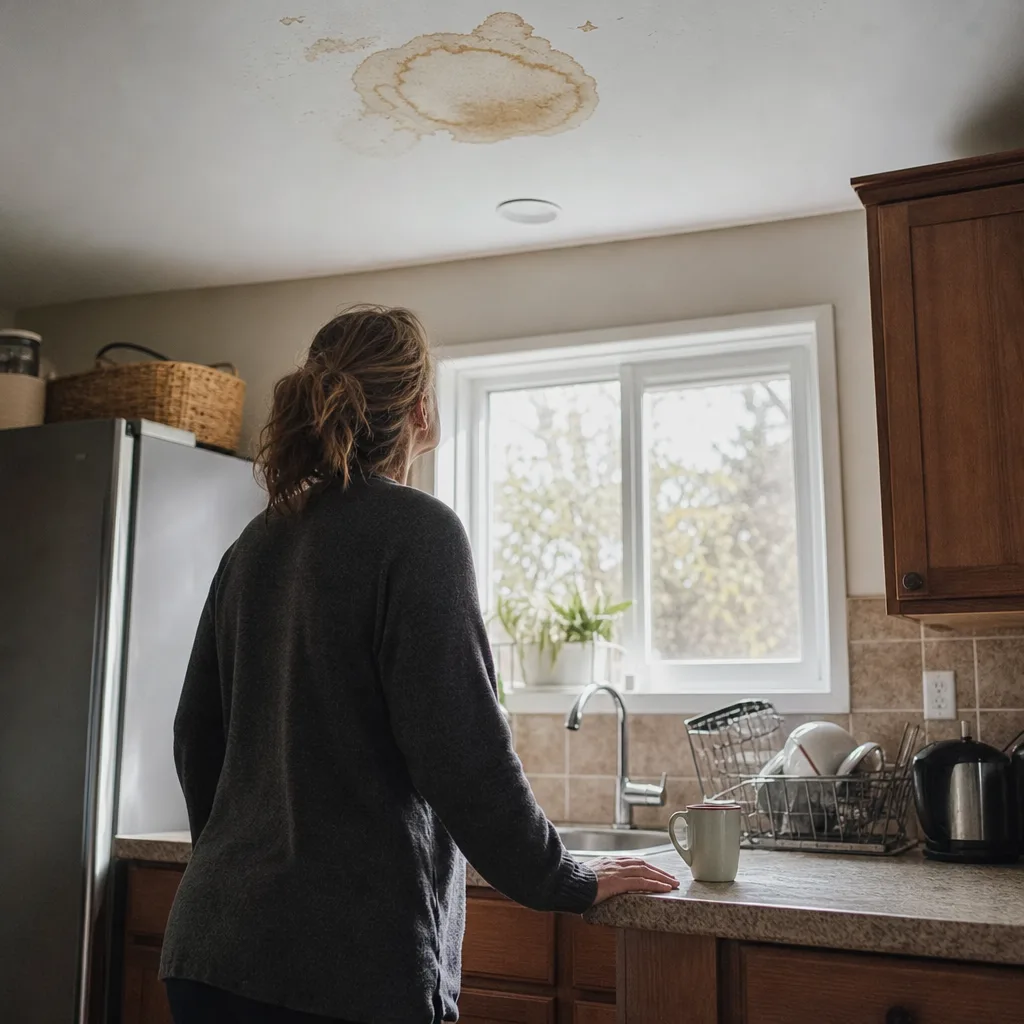
- One water stain that's dry, with board that still looks flat and firm.
- A hole from an old light fixture, a fan box, or a plumber's access cut.
Those are repair jobs. Josh got his start fixing exactly this kind of thing: cracks and nail pops that showed up after a new home's first winter. The goal back then was the same as now. Fix why it happened so it doesn't come back, and leave the rest of the ceiling alone. If that's all you're dealing with, our ceiling repair page covers it, and you can skip the cost of new board.
A full drywall ceiling installation is the better call when:
- The ceiling dips or bows between the joists.
- A leak has left the board soft, crumbling, or stained over a large area.
- Cracks run across the whole room, not just along one seam.
- Old plaster is loose or falling away from the lath.
- There's no ceiling yet, like an unfinished basement or a room opened up during a renovation.
Water damage is where people guess wrong most. A stain can dry and look harmless while the board above it has gone weak. And if the leak isn't fixed, new drywall gets ruined the same way. That's why Josh checks for moisture and damage at the in-person quote, before anyone talks about boarding. If the source is still active, it has to be dealt with first.
Textured ceilings add one more step. If your ceiling has popcorn or another texture from before 1990, it needs a lab test before it's scraped, cut, or torn out. If the result comes back positive, a licensed abatement contractor handles removal. Calgary Drywall Doctor doesn't remove asbestos. If the test is clear and you only want the texture gone, popcorn ceiling removal may be all you need, not new board.
On cost, the gap between the two is mostly labor and material. A repair touches a small area and blends it in. Replacement adds tearing out the old ceiling, hauling it away, hanging new board, then taping and finishing the whole surface. Ceiling height, room size, light fixtures, and the finish level you want all push the number up or down.
You shouldn't have to guess which one you're paying for. Josh measures the job in person and puts the scope in an itemized written quote. If a repair will do, that's what you'll see on paper.
Why a Moisture Check Comes Before Any Ceiling Goes Up
Drywall is a gypsum core wrapped in paper. Water softens the gypsum, and the paper gives mold something to feed on. On a wall, wet board might just stain. On a ceiling, gravity pulls on it every day, so weak board sags, seams open, and screws let go.
There's a second reason the check comes first. Once the board is up, you can't see the joists, the insulation, or the vapor barrier anymore. Checking for moisture before boarding is the last easy chance to find a problem. After that, finding it means cutting into a brand-new ceiling.
Moisture in a ceiling doesn't always come from an obvious leak. These are common places it starts:
- A bathroom, laundry, or kitchen right above the room, where a slow drain or supply leak drips onto the board for months.
- The attic, where warm, damp house air meets a cold roof deck and leaves frost that melts and drips.
- A roof leak or ice buildup at the eaves that sends meltwater back under the shingles.
- Basement framing near the foundation, or lumber that got rained on before the house was closed in.
- Ductwork or pipes that sweat in a cool basement ceiling space.
Wet framing causes trouble even when the board itself stays dry. Wood shrinks as it dries. If drywall is screwed to framing that's still damp, the wood pulls away from the screws as it dries out. That leaves nail pops and cracked seams. Calgary's long heating season and dry winter air speed that drying up. A ceiling that looked perfect in the fall can be popping and cracking by spring. Josh started out fixing exactly those first-winter cracks and nail pops in new Calgary homes, and checking before boarding is how you stop them from showing up at all.
Here's a typical case. You're finishing a basement, and there's a faint ring on the subfloor under the upstairs bathroom. It's dry today, so it seems like old news. But if a drain fitting still weeps every time someone showers, new board under it will stain and soften. You'd be paying to hang and finish the same ceiling twice.
If moisture turns up, we don't board over it. The source gets fixed first by the right trade, whether that's a plumber, a roofer, or whoever handles your attic or insulation. Calgary Drywall Doctor is a drywall business, and we won't pretend a leak or a venting problem is ours to fix. Once the source is dealt with and the framing has dried, the ceiling goes up on a sound base.
That can add a few days to your schedule. It also means the ceiling you pay for is the one you keep. Anything found during the check gets noted in your itemized written quote, so you know what has to happen before boarding and why.
Pre-1990 Textured Ceilings: Why Testing Comes First
If your ceiling has popcorn, stipple, or another spray texture that went on before 1990, it gets lab tested before anyone scrapes, cuts, drills, or tears it out. That's not optional on our jobs. Some ceiling textures from those years were made with asbestos. You can't tell by looking at it, and you can't tell by touching it. A lab test is the only way to know.
Here's why this matters so much for a new ceiling in particular. A small repair might touch a patch the size of a dinner plate. A full drywall ceiling installation disturbs the whole surface. Tearing out the old board, cutting new holes for lights, or scraping texture off the entire room all break up the material and put it in the air. Once that happens, it settles into the room and anywhere the air travels. That's the step you can't undo, so the test has to come before it.
Say you've bought an older bungalow. The living room ceiling has popcorn texture and a long crack, and you want it gone, with new board and a few pot lights. It's tempting to grab a scraper on a Saturday and get a head start. Don't. Until the result is back, treat that texture as something you leave alone.
Your home's build year is a good starting point, but it isn't the whole story. Texture can be added or redone during a later renovation, and an old ceiling may have been painted over so it looks newer than it is. If you're not sure when the texture went on, assume it needs testing.
What happens next depends on the result:
- If the test comes back clear, the job moves ahead like any other ceiling. If the board itself is sound and you just want the texture gone, popcorn ceiling removal may be enough, and you won't need new board.
- If the test comes back positive, a licensed abatement contractor handles the removal. Calgary Drywall Doctor doesn't remove asbestos and won't disturb that material. Once abatement is finished, we can hang, tape, and finish the new ceiling.
On cost, testing and any abatement are separate from the drywall work, done by separate trades. A clear result usually adds little beyond the test itself and a short wait. A positive result adds the abatement contractor's scope and time before boarding can start. Either way, you'll know where you stand before any money goes into new board.
If you know or suspect your ceiling texture is from before 1990, mention it when you book your in-person quote. Josh can then plan the scope and timing in your itemized written quote around that step, so it isn't a surprise halfway through the job.
Ready when you are - get in touch today.
Calgary Drywall Doctor is ready to help.
Basement Development Ceilings and Calgary Permit Rules
A basement ceiling isn't just an upstairs ceiling one floor down. It's where the house keeps its guts: the main beam, heating ducts, drain lines, water supply, and wiring. A good basement ceiling works around all of that and still looks flat and clean. It also has to go up at the right point in the project, and in Calgary that point depends on the City's permit and inspection steps.
Developing a basement in Calgary generally needs a building permit from the City. That usually covers the framing, the insulation, and any new plumbing, electrical, or heating work. These are the parts that drywall hides for good. Inspectors need to see that work before it's covered. If the ceiling goes up too early, you could be asked to open it back up. Check with the City of Calgary on what your project needs before work starts. The rules depend on what you're building and how the space will be used.
In plain terms, the ceiling usually comes near the end of the rough work, not the start. A typical order looks like this:
- Framing goes in, including any bulkheads that box in ducts or the beam.
- Plumbing, electrical, and heating rough-ins are done by those trades.
- Any inspections that have to happen before the walls and ceiling are covered are done and passed.
- The ceiling is boarded, taped, and finished, usually before the walls so the joints meet cleanly.
Planning to add a secondary suite, or rent the basement out later? Then the ceiling matters even more. A suite generally needs fire separation between the units. In most basements, that means a fire-rated drywall ceiling installed as a full assembly. The board type, the fastening, and how gaps around pipes and ducts are sealed all count. A regular ceiling with fire-rated board screwed up the usual way doesn't automatically meet the rule. We're trained in fire-rated assemblies, so tell us at the quote if a suite is part of the plan, even a someday plan. Upgrading the ceiling now is far easier than tearing it out after it's painted.
Basements also bring practical choices that change the job and the price. These are the things worth sorting out before boarding:
- Headroom. Bulkheads around ducts and the beam eat into ceiling height, so their size and placement should be settled early.
- Access. Shutoff valves, cleanouts, and junction boxes still need a way in after the ceiling is closed, so plan access panels before the board goes up.
- Sound. A ceiling under a busy kitchen or a kids' bedroom can be built to cut noise, and that choice is made before boarding.
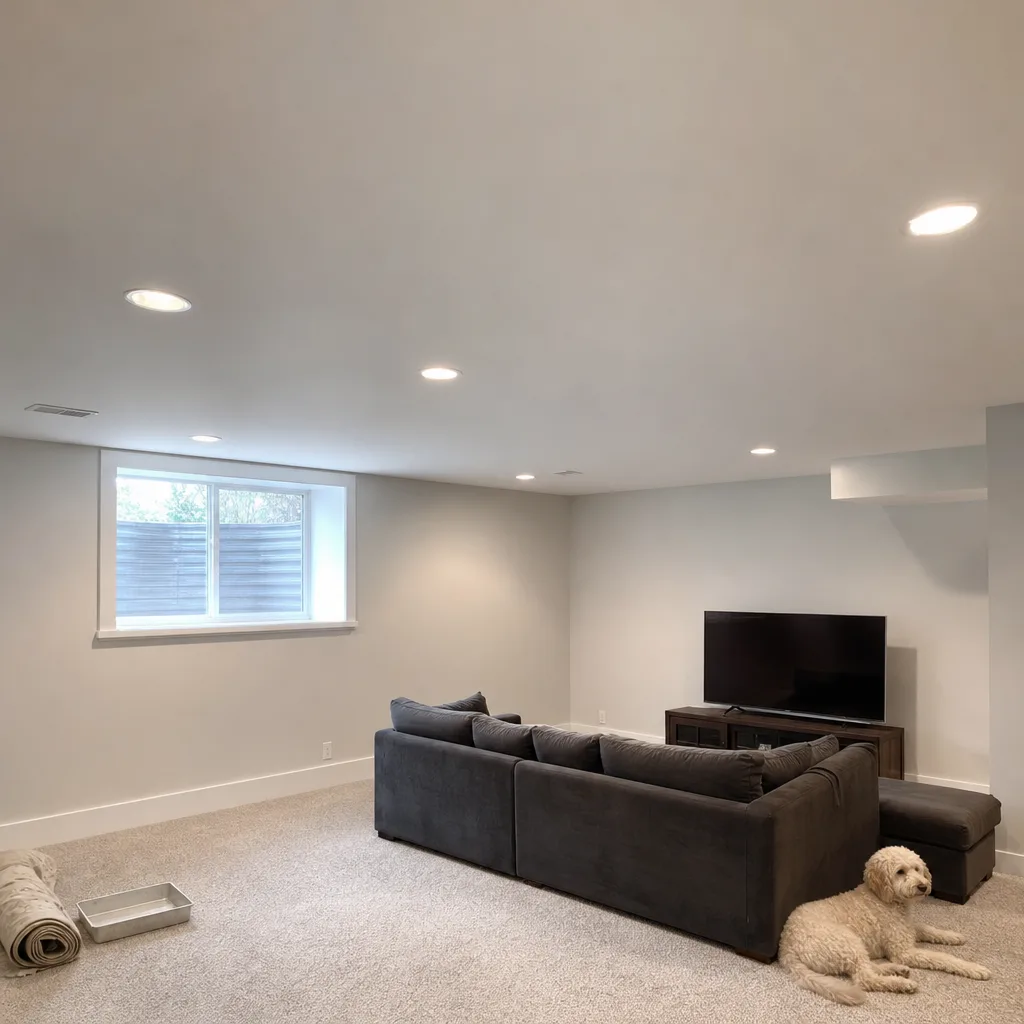
- Lighting. Pot lights are cleaner to plan around the joists than to cut in later.
The basement's moisture check matters here too. Foundation walls and pipes that sweat in a cool basement are common trouble spots. You don't want them sealed above a finished ceiling.
On larger basement projects, a boarding and taping crew works alongside Josh. He still leads the finishing and does the final inspection under raking light. That low, side-on light shows every ridge and dip before you sign off. If you're doing a full build-out, our basement development page covers the bigger picture. For the ceiling itself, the itemized written quote spells out the board type, fire-rated areas, bulkheads, and access panels. That way you can line it up with your permit and the other trades.
What Happens During Installation and Finishing
Once the moisture check is clear and any texture testing is done, a new ceiling goes up in a fairly set order. Most of the time on the job isn't hanging board. It's waiting for joint compound to dry between coats. Knowing the order helps you plan around a few days of noise and dust.
- Prep. Furniture comes out or gets covered, floors are protected, and the room is sealed off from the rest of the house. We follow dust control steps, which matter because sanding a ceiling puts fine dust right over your head.
- Tear-out, if there's an old ceiling. The old board or plaster comes down and is hauled out. With the framing open, sagging or damaged joists can be spotted before anything new is attached to them.
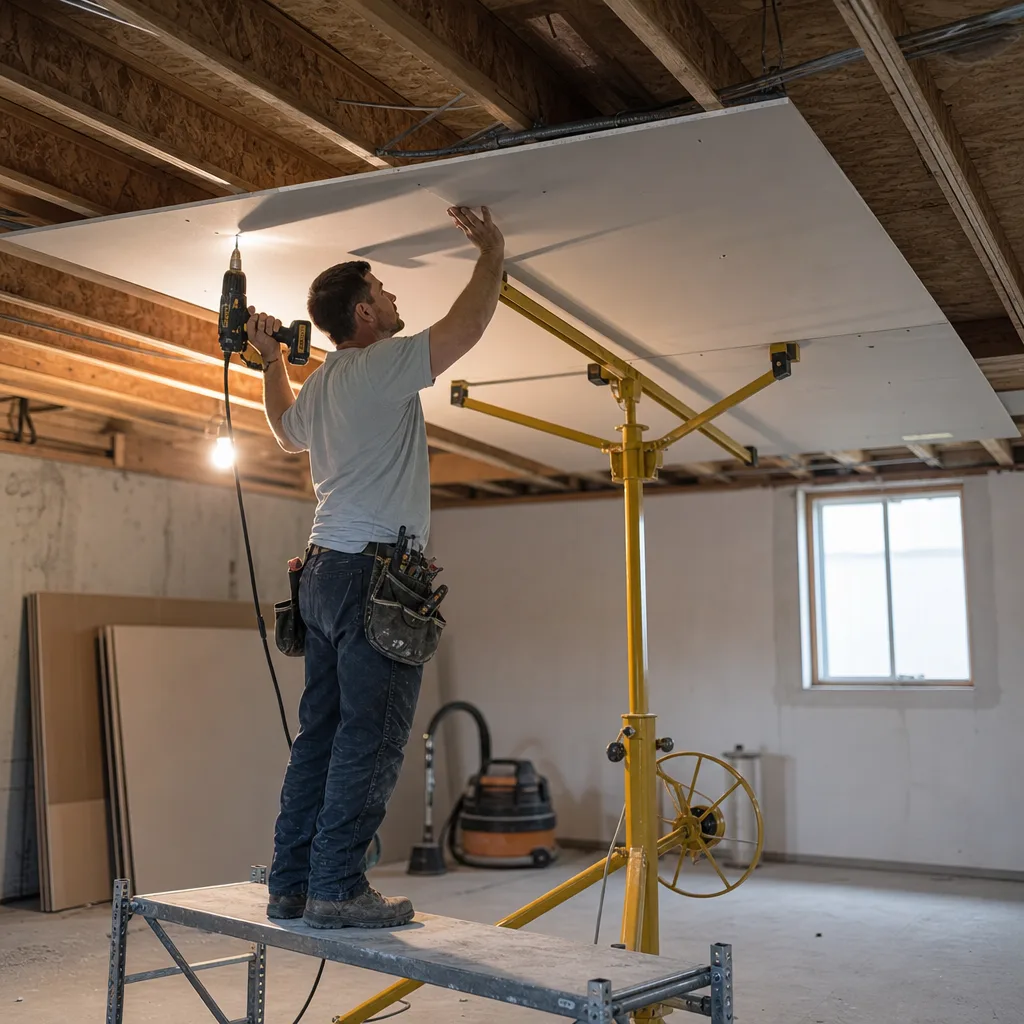
- Hanging. Ceilings usually go up before walls so the wall sheets help support the ceiling edges. Sheets run across the joists, get screwed on in a tight pattern, and are cut out for lights, vents, and fan boxes. Ceiling board is heavy, so it's lifted into place with a drywall lift or extra hands, not muscled up by one person.
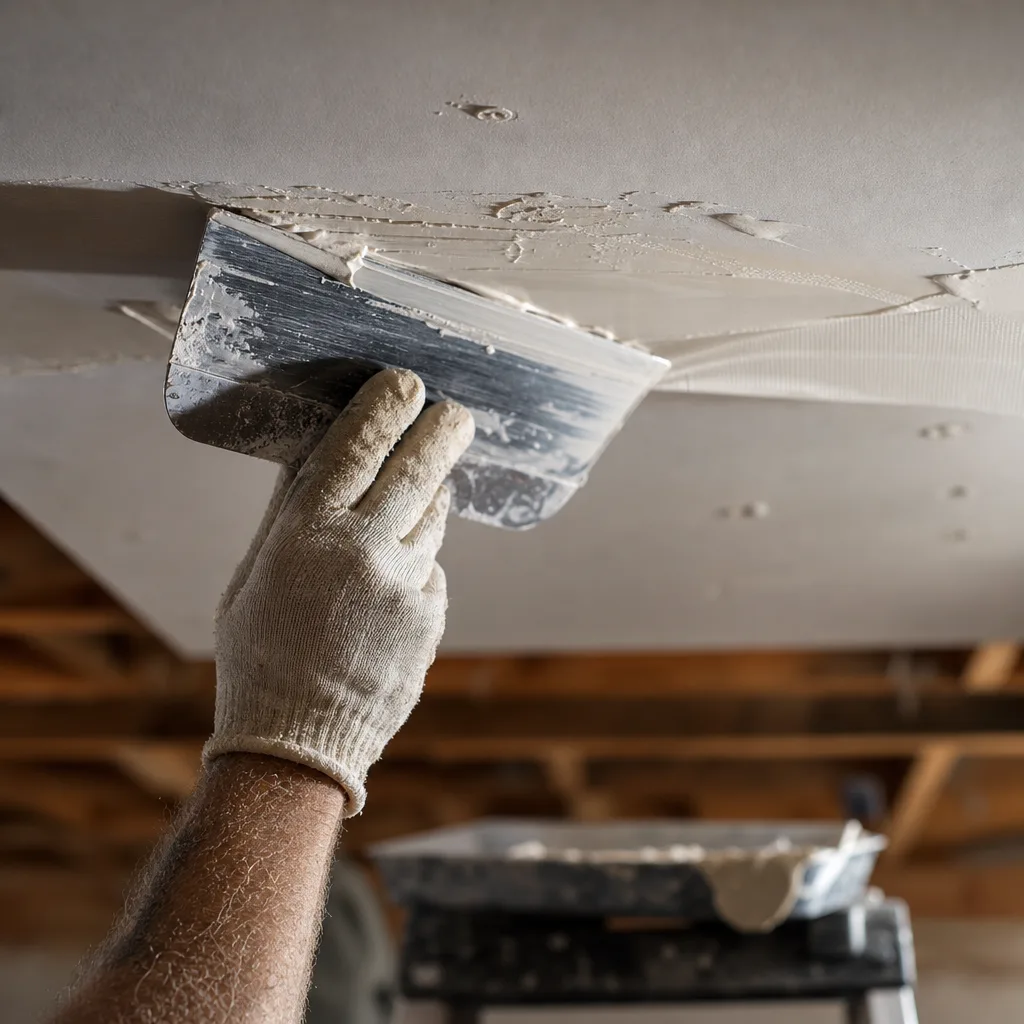
- Taping and mudding. Tape goes over every seam and inside corner, then several thin coats of joint compound are spread over the tape and the screw heads. Each coat has to dry before the next one goes on. That drying time is why this stage takes days, not hours.
- Sanding. Each coat is sanded smooth so the seams disappear once the ceiling is primed and painted.
The finish level you pick matters more on a ceiling than on a wall. Light from windows and fixtures skims across a ceiling at a low angle, and that shows every ridge and hollow. Drywall finishing is graded in levels. Level 4 is common for flat painted ceilings: tape and several coats over the seams and screws. Level 5 adds a thin skim coat over the entire surface, so the paper and the mudded joints look the same once painted. It's worth asking about if you've got big windows, long open ceilings, pot lights washing across the surface, or plans for darker or glossier paint. We offer Level 5 finishing on request.
If you'd rather hide small flaws than chase them, a texture is another route. Knock down ceilings and ceiling texturing each have their own page. Whatever you choose, the finish level is written into your itemized quote, so you know what you're paying for before work starts.
Josh leads the finishing himself. Before you sign off, he does the final check under raking light, so problems get caught while they're still easy to fix, not after the paint's on. The ceiling is then ready for primer and paint. If something comes up mid-job, like a question about a light location or what you see after a coat dries, you can contact Josh directly. You won't have to go through an office.