Taping and mudding is where most drywall problems start. Ridging seams, cracking joints, banding, ghosting — all trace back to this stage. Our crew uses paper tape on flat seams, compound selection matched to each coat, and proper feathering throughout. Three coats. No shortcuts.
Ridging — a raised seam visible through paint — happens when paper tape is embedded over too thin a bed of compound. The tape itself creates a ridge that never disappears under paint, no matter how many coats go on top. Banding — a tonal strip on the wall visible in raking light or under certain lighting conditions — happens when compound isn’t feathered wide enough and the edge of the mud zone catches light differently from the surrounding surface. Both are permanent unless the tape is stripped and the seam is redone from scratch.
Alberta’s low humidity creates a specific risk that’s less common in humid climates: compound dries faster and shrinks more. A fill coat applied over 1/8” thick in a single pass will crack as it dries — not immediately, but within weeks in a heated Calgary home during winter. Two thinner coats produce substantially better results than one thick coat attempting to fill the same depth. Most of the callbacks our crew gets called in to fix trace back to crews that skipped the fill coat or applied it too thick to save a day.
The compound type matters at each stage and the choice isn’t arbitrary. Setting compound (hot mud) is ideal for the tape coat on large jobs — it shrinks less than pre-mixed and allows faster re-coating without waiting for full moisture to leave the board. All-purpose pre-mixed is appropriate for fill coats. Lightweight compound is the right choice for the finish coat — it sands more easily without leaving swirl marks from the sanding block, and the lower weight reduces the stress on the dried compound below it.
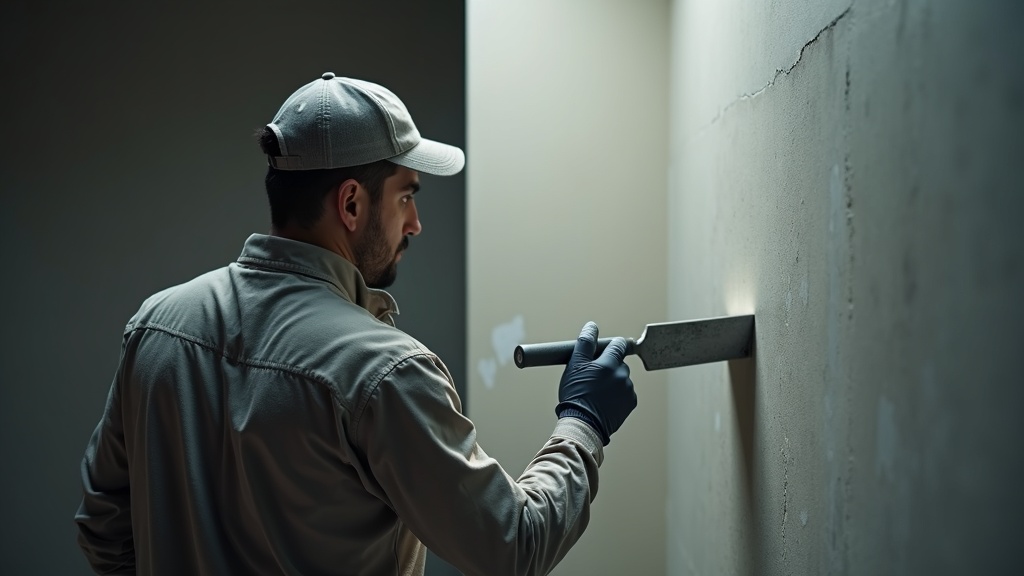
Each coat has a specific job. Trying to do one coat’s job in the next coat — filling at the finish stage, finishing at the tape stage — is where the problems start. Here’s what each coat does and why it matters.
Embed paper tape in all-purpose or setting compound. Press out air bubbles from the centre outward — bubbles cause hollow spots that crack under paint. The bed coat should be thin: 1/16” is enough to bond the tape to the board. Fill butt joints and corner bead at this stage. In Alberta’s dry winter air, setting compound gives more working time before the edge starts to set and pull away from the tape.
Build the seam flush with the board surface, feathering 6–8 inches each side of the seam centreline. Don’t try to get perfectly flush in one coat — it’s better to apply slightly short of flush and add a third coat than to over-apply and crack during drying. Allow full dry, minimum 24 hours in winter. The fill coat is where most shortcuts show up later. If this coat cracks, the finish coat won’t hide it.
Skim coat with lightweight compound. Feather 8–10 inches each side. Sand with 120-grit then 150-grit. No swirl marks — swirl marks are visible under paint on any finish above Level 3. Inspect under a bright work light held low and parallel to the wall before calling it done. This is not optional: defects visible under a work light will be visible under kitchen or bathroom lighting after the painter leaves.
The product choice at the tape coat stage determines how the seam holds up over time. In Calgary’s climate, this distinction matters more than it does in humid regions.
| Type | Strength | Best Use | Avoid Using For |
|---|---|---|---|
| Paper tape | High tensile strength; won’t stretch or bridge gaps | Flat seams, butt joints, all standard taping | Nothing — this is the correct product for most applications |
| Fibreglass mesh tape | Self-adhesive, easy to position | Small repairs, corner patches, accessible curved surfaces | Flat seams and butt joints — higher crack risk in dry climates |
| Pre-creased paper (corner tape) | Folded for consistent 90° inside corners | Inside corners throughout | Outside corners — use metal or plastic bead instead |
The most common DIY taping mistake is using mesh tape throughout for speed — it positions itself and doesn’t require the skill of embedding paper tape cleanly. In Calgary’s dry climate, mesh tape on flat seams almost always shows cracks within 1–3 years, especially in heated spaces where the walls cycle between humid conditions (showers, cooking) and the extreme dryness of a Calgary winter with the furnace running. Paper tape bonds differently to the compound and doesn’t have the bridging failure mode that mesh tape exhibits across flat seams.
A homeowner in Varsity had a bathroom addition done 7 years prior by a previous contractor. Mesh tape had been used throughout on all flat seams. By the time we were called, every seam in the 320 sq ft addition was visible through the paint and had cracked at multiple points. The cracks were consistent with mesh tape failure on flat seams in a heated space — exactly the failure mode that paper tape prevents.
Our crew stripped all the taping from the addition down to the board face, assessed the board for any moisture damage (none found), and ran the full 3-coat process with paper tape throughout. New inside corner tape was installed at all corners and fresh metal bead was applied at outside corners that had begun to separate. A full prime coat was applied before hand-off. At the 1-year check-in requested by the homeowner, zero cracks had appeared across any seam in the addition.
Paper tape. Three coats. Proper feathering. Written quote before we start. That’s the standard on every job.