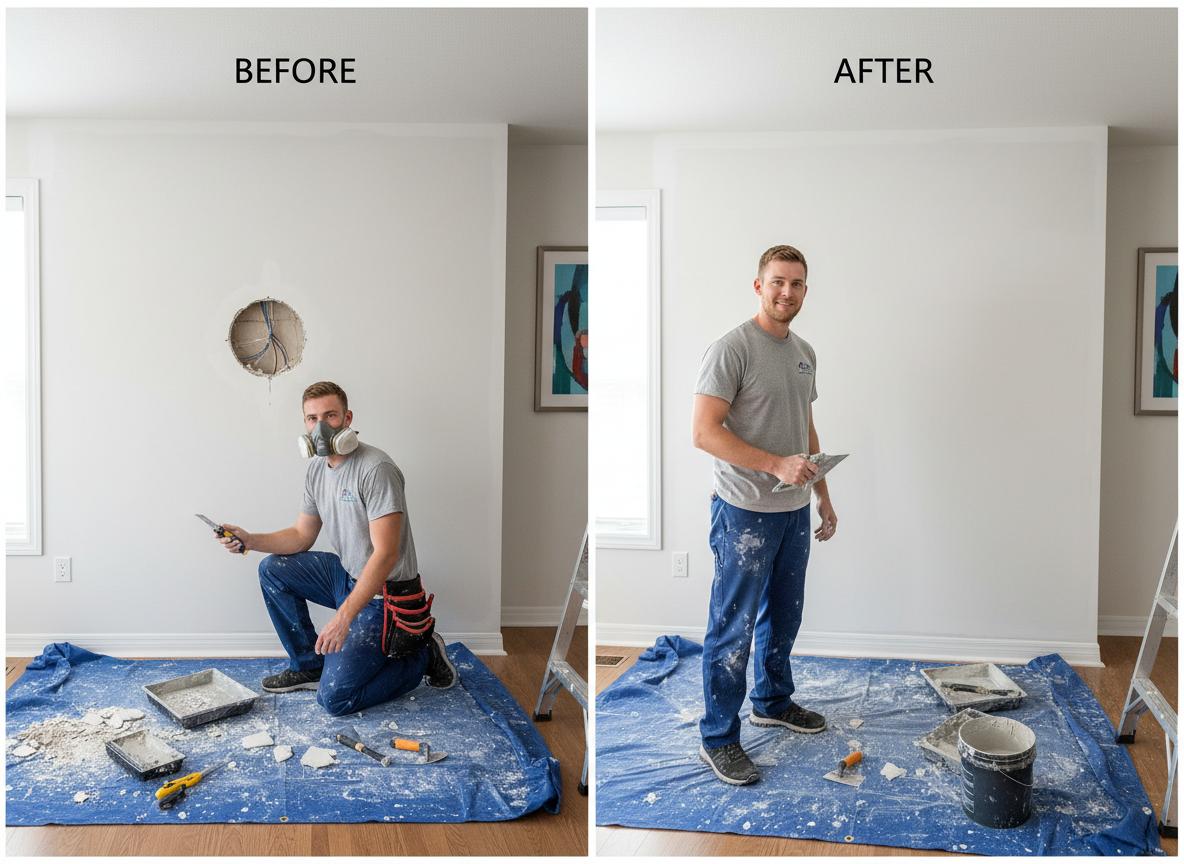
Holes, cracks, water damage, settling seams. We find the cause before we patch the surface — so the repair holds instead of coming back six months later.
Most drywall repairs fail because they address the surface without addressing what caused the damage. A crack filled with caulk reappears in eight months because the wall is still moving. A water stain patched without checking for moisture behind the wall means there's still moisture behind the wall.
Our crew checks for the source before we patch anything. On water-related repairs, that means a moisture check before the scope is written. On settling cracks, it means understanding the crack pattern before we decide how to fix it.
Properly repaired. Texture matched. Invisible once painted. That's what a drywall repair should be — and it's what every job we take on delivers.
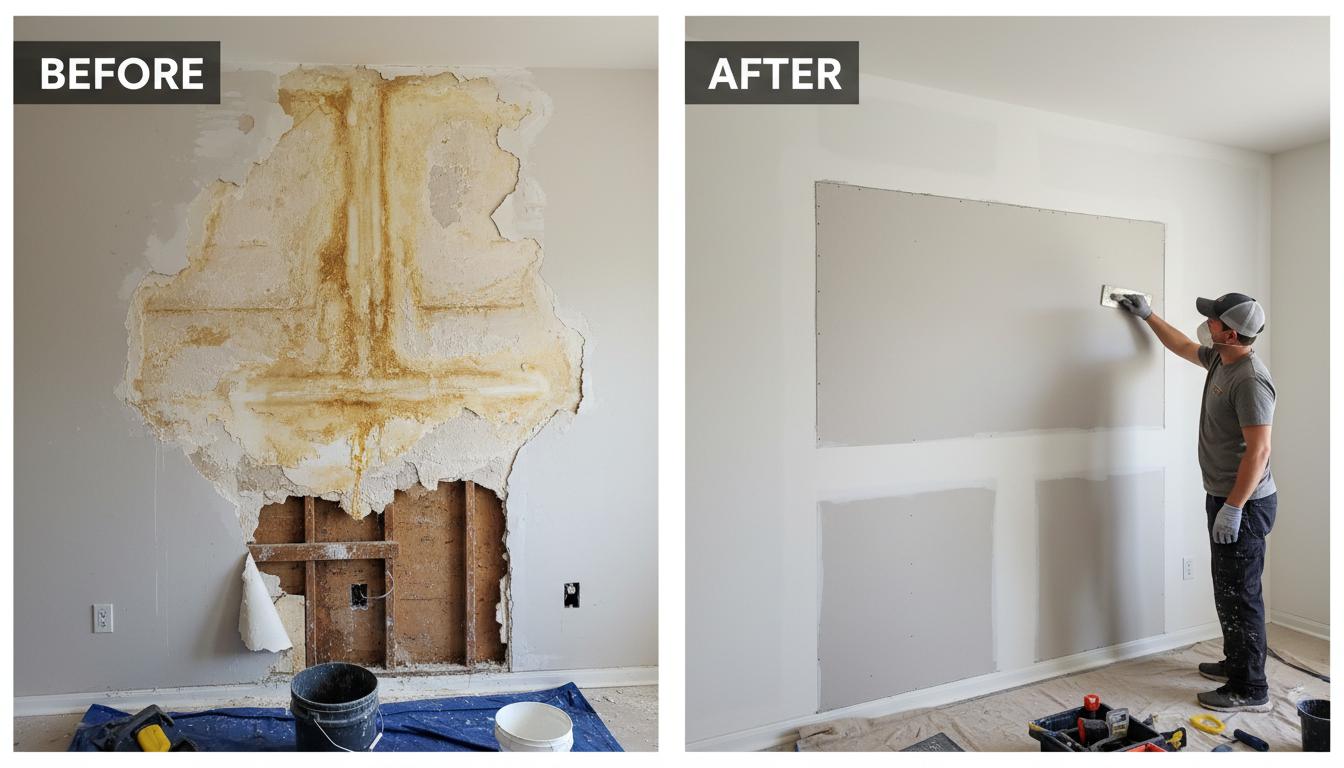
From doorknob holes to full water-damage remediation, our crew handles every kind of residential drywall repair in Calgary.
Doorknob damage, anchor pull-outs, accidental impacts. Properly backed, meshed, and skimmed so the repair is invisible — not just filled.
Calgary's freeze-thaw cycle causes cracks at window corners, door frames, and ceiling lines. We cut, mesh, and skim properly — not caulk and paint over.
We check for active moisture before patching any water-related repair. Patching over wet framing leads to mold. We fix the cause, then fix the wall.
Bubbling tape, visible seams through paint, ridges at joints. Common in older Calgary homes. We re-tape and skim properly so the seam disappears.
Knockdown, orange peel, smooth, or custom — we match existing textures so repaired areas blend seamlessly once painted.
Sagging sections, water stains, damaged compound. Ceiling repairs are quoted and finished to the same standard as wall work — no shortcuts because it's overhead.
Why do drywall cracks keep coming back in Calgary homes even after repairs?
Because they were patched instead of fixed. Calgary's freeze-thaw cycle puts constant seasonal stress on foundations and framing — the ground moves, the structure moves slightly, and that movement shows up first at drywall stress points: window corners, door frames, ceiling lines at exterior walls. If you fill a settling crack with caulk or setting compound and paint over it, it will reappear. The correct repair is to cut the crack open, apply fibreglass mesh tape, and skim in two or three coats of finishing compound feathered wide enough to flex with the wall. That's how it stays gone.
What's the right way to repair water-damaged drywall, and what do most contractors skip?
Most contractors skip the moisture check. They see a water stain, replace the board, skim it, done. If the source of the water hasn't been identified and resolved, the repair fails — and now there's mold growing behind new drywall. Every water-related repair we take on starts with a moisture meter check on the framing and adjacent areas. If there's active moisture, we identify the source first. Only when the readings are right do we install new board. It adds time, sometimes significantly. But patching over a wet wall is not a repair — it's a delay.
How do you match existing wall texture so a repair is invisible?
Texture matching is part skill, part patience. The process starts by identifying exactly what texture the existing wall has — knockdown, orange peel, hawk-and-trowel, or a custom hand-applied finish. We test the match on cardboard or a hidden section first before touching the repair area. The biggest mistake is rushing the skim coats underneath — if the base coat isn't properly smooth and feathered, the texture on top will show the repair boundary. We take the time to get the underlying surface right before any texture goes on.
When is drywall repair a reasonable DIY job, and when should a homeowner call a professional?
Small holes — a doorknob punch-through, a few anchor holes — are reasonable for a capable homeowner with a patch kit and patience. The limitation is texture matching: most patch kits produce a slightly different texture than the surrounding wall, which shows under paint. Where we'd always say call a professional: any crack that has reappeared after a previous repair, any repair involving water staining, and any repair in a prominent or well-lit area where the finish needs to be invisible. Paying for a professional repair once is always cheaper than paying for three DIY attempts followed by a professional repair.
What's an example of a repair job that turned into something more significant once the wall was opened?
A homeowner in Montgomery called us about a recurring crack near a bathroom — same crack, repaired three times over five years by different contractors. When we opened the wall, there was a slow drip from a compression fitting on a supply line, and the framing behind the wall had been absorbing that moisture for years. The crack kept coming back because the wall was moving from softened framing. The repair wasn't a drywall problem — it was a moisture and structural problem that showed up in drywall. We identified the plumbing issue, the homeowner had it fixed, we let the framing dry out fully before closing the wall. That crack hasn't come back.

A homeowner in Montgomery had the same crack near a bathroom wall repaired three times in five years. Each contractor patched it, painted it. It came back.
When we opened the wall: a slow drip from a compression fitting on a supply line, with years of moisture absorption in the adjacent framing. The wall was moving because the framing was soft.
The fix wasn't drywall — it was moisture. Plumbing repaired first. Full dry-out. Moisture readings confirmed. Then new board, proper skim, texture matched. That crack has not returned.
Calgary's freeze-thaw cycle causes foundation and framing movement every spring and fall. This stress appears first at window and door corners and along ceiling lines. The correct fix is to cut the crack, mesh it, and skim in multiple coats — not fill with caulk, which fails within months.
Yes. We repair water-damaged drywall but always check for the moisture source first. Patching over wet or previously wet framing without addressing the cause leads to mold and repeat repairs within months.
Yes. We match knockdown, orange peel, smooth, and custom finishes. We test on a discreet area first before working on the repair itself — so the match is right before it matters.
Small repairs typically range from $150–$400 depending on size and texture matching. Larger repairs involving water damage or multiple areas are quoted by scope. Written quotes with itemized pricing on every job.
Most small-to-medium repairs are completed in 1–2 days, allowing proper drying time between mud coats. Water damage repairs may take longer if moisture remediation is required first.
Free on-site assessment. We find the cause, quote the fix, and match the texture. No surprises.