Serving Calgary & Surrounding Areas  — Call 587-417-5252
Drywall Installation — Calgary

Fire-Rated Drywall
Installed to Code

Type X and Type C fire-rated drywall for attached garages, secondary suite separations, mechanical rooms, and commercial assemblies. Installed to Alberta Building Code spec — inspection-ready, no shortcuts.

Alberta Building Code compliant Inspection-ready installations Written quote before work starts

Fire-Rated Drywall Isn’t Optional
in These Applications

Fire-rated drywall isn’t a premium upgrade — in certain applications it’s a code requirement. Alberta Building Code mandates minimum fire-resistance ratings for attached garages, secondary suite separations, mechanical rooms, and commercial occupancy separations. Standard 1/2-inch drywall in these locations doesn’t just fail inspection — it voids your insurance coverage on fire claims.

Type X drywall is 5/8-inch thick with glass fibres embedded in the gypsum core. These fibres hold the board together as the gypsum calcines in a fire, slowing penetration and buying time for occupants to exit. A correctly installed Type X assembly on a standard wood frame wall achieves a 1-hour fire rating — the minimum required for most residential fire separations in Alberta.

The installation matters as much as the board. Correct fastener spacing, no perimeter gaps, sealed penetrations, and proper taping — all of these affect whether the assembly achieves its rated performance. Getting the board right but skipping the penetration sealing still fails inspection.
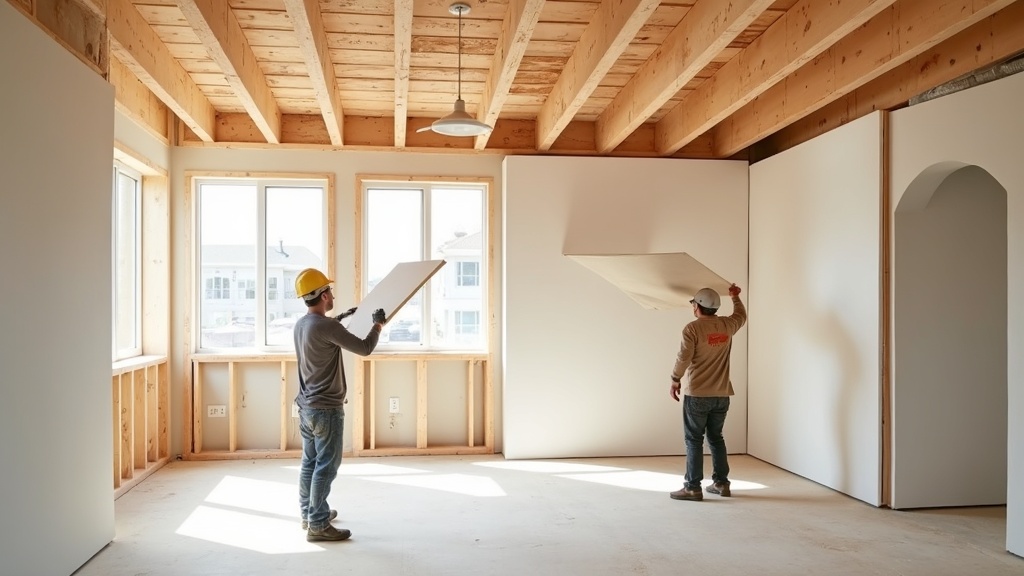
Fire-rated Type X drywall installation Calgary — garage and suite separation

Where Fire-Rated Drywall
Is Required in Calgary

These are the most common applications where the Alberta Building Code requires a fire-resistance-rated assembly. If you’re pulling a permit for any of these, your inspector will verify the assembly.

ABC 9.10.9.1

Attached Garage Separation

Any wall or ceiling between an attached garage and living space requires a minimum 1-hour fire separation. This means 5/8-inch Type X drywall on the garage side, correctly fastened, taped, and mudded. The door between the garage and house must also meet fire door requirements.

ABC 9.8.2

Secondary Suite Separations

Secondary suites (basement suites, carriage houses, laneway homes) require fire separation between the suite and the principal dwelling. This typically means a 1-hour fire-resistance-rated assembly on floors, walls, and ceilings separating the two units — critical for legal suite approval in Calgary.

ABC 9.10.8

Mechanical Rooms

Rooms containing high-BTU furnaces, hot water tanks, and gas appliances in multi-unit buildings or when adjacent to habitable space may require fire-rated enclosure. The specific requirement depends on the appliance type and the building classification.

Commercial

Commercial Occupancy Separations

Office buildouts, tenant improvements, and mixed-use buildings have assembly requirements determined by occupancy class and floor area. We work directly with your GC and permit drawings to install the specified assembly — see our commercial drywall page for the full scope.

What Makes a Fire Assembly
Pass or Fail Inspection

Inspectors don’t just check board thickness. They verify the entire assembly. Here’s what passes and what fails.

Assembly ElementPassCommon Failure
Board type5/8” Type X (or Type C where specified)Standard 1/2” drywall — common when homeowners buy wrong product
Fastener spacing7” o.c. for screws on walls, 6” on ceilings (per assembly spec)12” spacing used for non-rated work; reduces assembly performance
Perimeter gapsBoard butted to framing with ≤1/8” gaps; gaps filled with compoundGaps at ceiling or floor line; fire bypasses board at the edges
Penetration sealingAll electrical boxes, pipes, and HVAC penetrations sealed with approved fire caulkUnsealed electrical boxes — the most common single inspection failure point
Taping & muddingAll joints taped and mudded to close any gap in the board layerUntaped joints; negates the continuous assembly rating
Door assembly20-minute rated door with self-closer between attached garage and houseStandard interior door; fails regardless of drywall quality
Case Study — Edgemont, Calgary

Standard Drywall on a Garage Wall.
Failed Inspection. Re-Done Right.

A homeowner in Edgemont hired a general handyman to finish the interior of their attached double garage. The work looked fine — taped, mudded, painted. The problem emerged at permit inspection for a secondary suite they were adding in the basement: the inspector flagged the garage-to-house wall as standard 1/2-inch drywall, not the required 5/8-inch Type X.

The homeowner had to remove 340 square feet of finished drywall from the garage side of the shared wall and ceiling, dispose of it, and re-board with Type X. We scoped the remediation, installed the correct assembly with proper fastener spacing and penetration sealing, and submitted for re-inspection. It passed first attempt.

The original work cost roughly $800. The remediation — removal, disposal, materials, labour, and second inspection — cost over $2,100. Using the right board upfront costs less than the drywall itself.

Fire-Rated Drywall FAQ

How do I know if I need fire-rated drywall?
In Alberta, fire-rated drywall is required by the Alberta Building Code in these common residential applications: any wall or ceiling between an attached garage and living space (1-hour fire separation), secondary suite separations, and mechanical rooms. If you’re pulling a permit for any of these areas, the inspection will require the correct assembly.
What’s the difference between Type X and Type C drywall?
Type X is 5/8-inch drywall with glass fibres added to the core — it provides a 1-hour rating in a standard wood-framed wall assembly. Type C is a premium version with additional rehydratable compounds that expand under heat, offering better performance in some assemblies. For most residential Calgary applications, Type X is the code-required product.
Does the whole attached garage need to be Type X?
Not the whole garage. Type X is required on the walls and ceiling shared between the garage and the living space — the garage-to-house wall and ceiling if there’s living space above. The exterior garage walls (not shared with the house) do not require Type X in most cases.
Does fire-rated drywall have to pass inspection?
Yes. Any work requiring a permit will be inspected. The inspector checks board thickness, fastener spacing, perimeter gaps, penetration sealing, and taping. An incorrect assembly — standard 1/2-inch instead of 5/8-inch Type X — will fail and require removal and replacement.
Does fire-rated drywall look different once finished?
No. Once taped, mudded, and painted, the surface looks identical to standard drywall. The only visual difference is the slightly greater wall thickness (5/8-inch vs 1/2-inch board) at unfinished edges.

Need a Code-Compliant Fire Assembly?

Written scope before work starts. Installed to Alberta Building Code. See our full drywall installation services or commercial drywall for larger assemblies.